
fundraisers in Culver City.
A carnival fundraiser is a community event built to raise money through tickets, wristbands, concession sales, sponsorship booths, or a mix of all four. The entertainment is usually simple and repeatable: carnival game booths, prize redemption, popcorn or cotton candy, a clear entrance point, and a layout that keeps families moving without turning the event into a full fair. This is a local guide to Fundraisers in Culver City — how school groups, booster committees, nonprofits, and neighborhood organizations typically structure them, where they fit, and what details matter before a committee starts pricing packages.
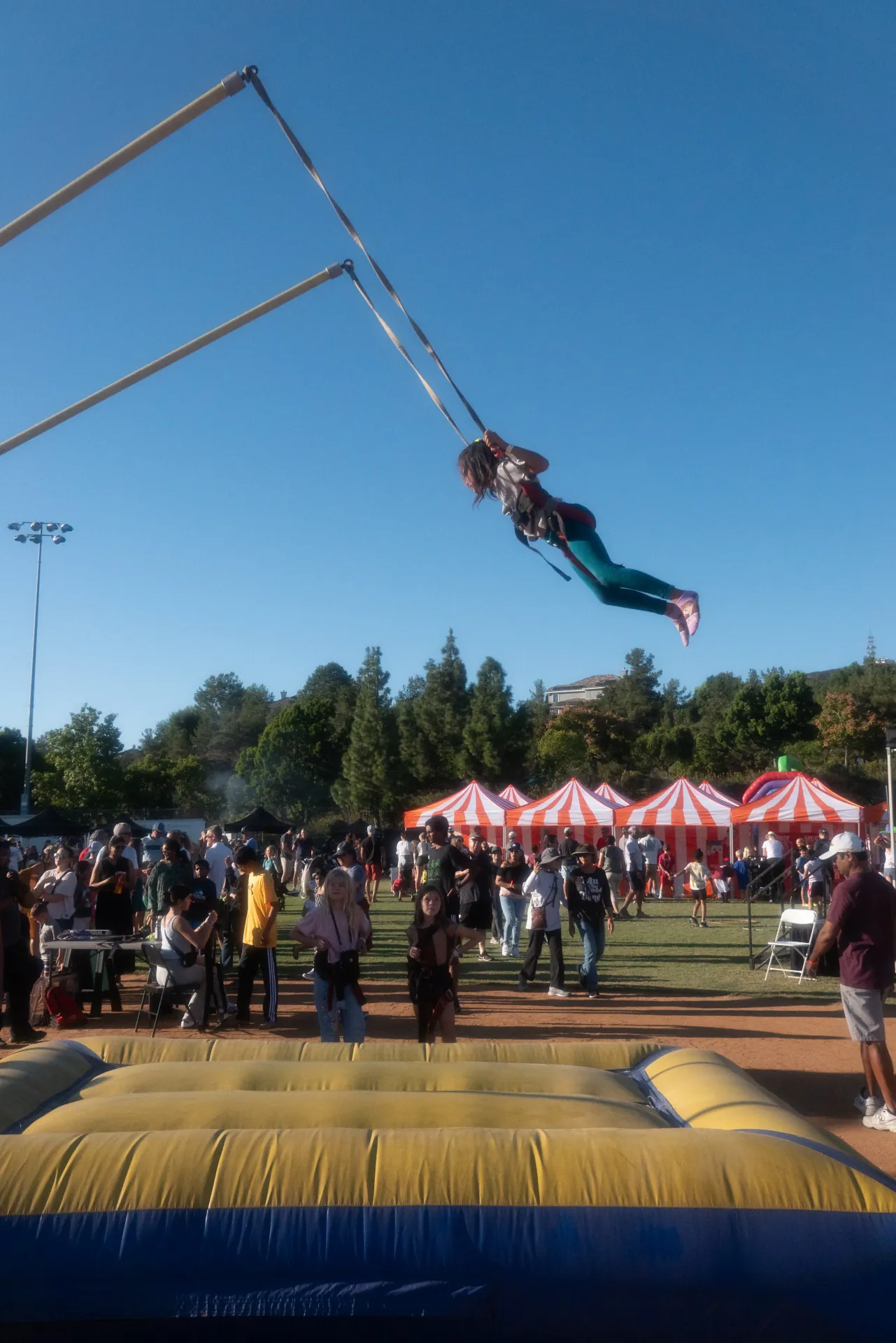
Culver City fundraiser planning often centers on compact, high-traffic spaces rather than large open fairgrounds. School blacktops, multipurpose-room patios, community-center courtyards, and park-adjacent lawns all work when the layout is tight and the check-in area is easy to read. Culver City Unified School District campuses are common anchors for school fundraisers, while Culver City Park, Syd Kronenthal Park, and Blair Hills Park are better fits when a group wants a public-park setting with room for families to spread out.
Carnival Fun Experts supports carnival-style fundraisers across Los Angeles County, with Culver City events usually shaped by short load-in paths, neighborhood parking limits, and layouts sized for families arriving in waves.
How a fundraiser usually works in Culver City.
Most carnival fundraisers run for two to four hours. Guests check in at a ticket or wristband table, then move through a compact field of booths: ring toss, bottle knockdown, plinko, beanbag throws, and other low-instruction games that can be understood in a few seconds. Concessions sit close enough to the action to draw repeat visits, but far enough from game lines that strollers and younger kids are not backing into hot equipment or extension cords.
The money model drives the layout. A school PTA or booster group may sell unlimited-play wristbands and keep food separate. A nonprofit may sell ticket bundles so every booth, snack, and raffle entry has a visible value. A club fundraiser may use sponsored booths, where a local supporter covers one activity and the group keeps admission or food revenue. Carnival Fun Experts is typically one part of that structure: equipment, booth layout, concessions, and optional attendants. The host group still owns the fundraising goal, volunteer table, admissions plan, sponsor signs, and any raffle or donation collection.
What's typically included.
-
Carnival game booths.
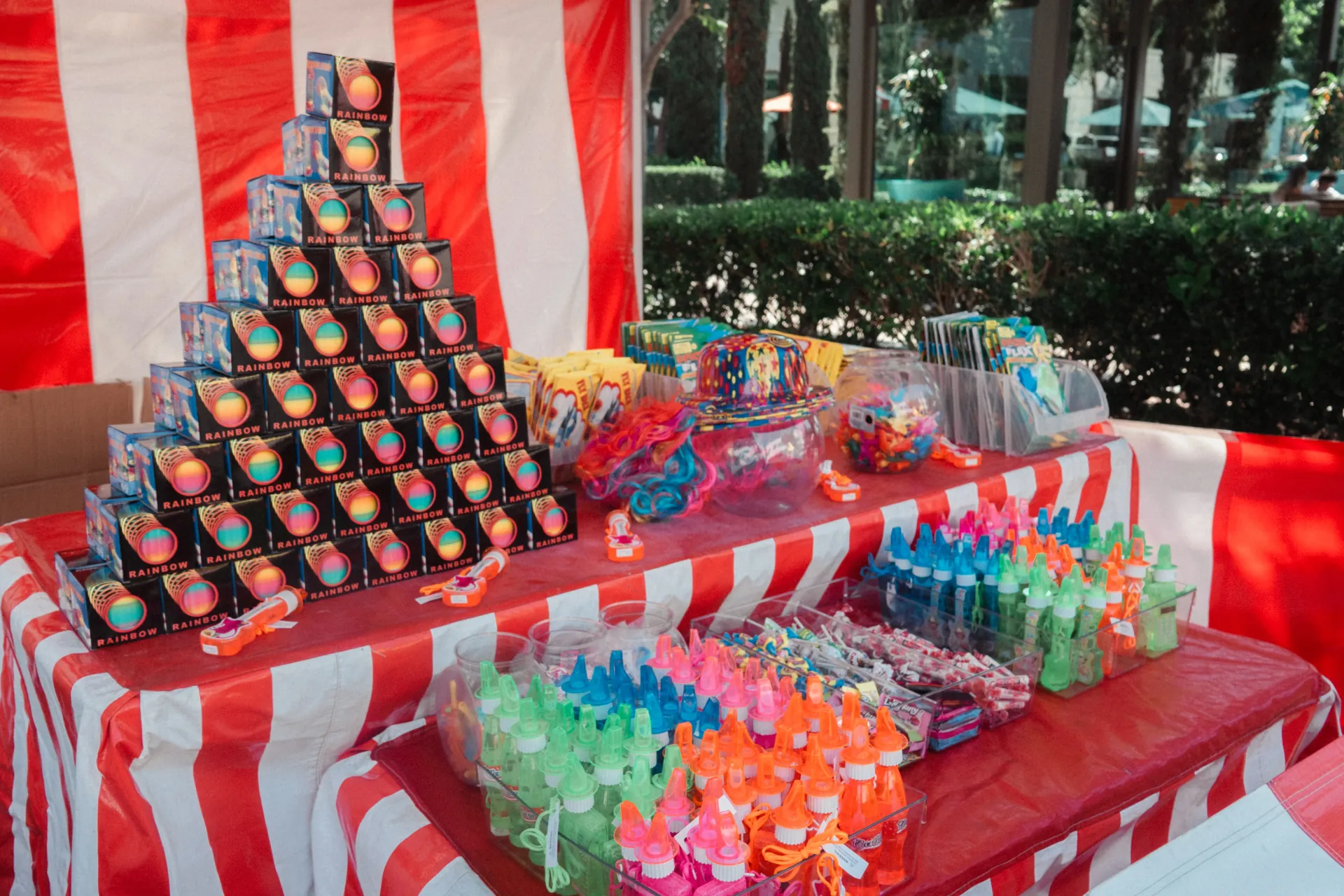
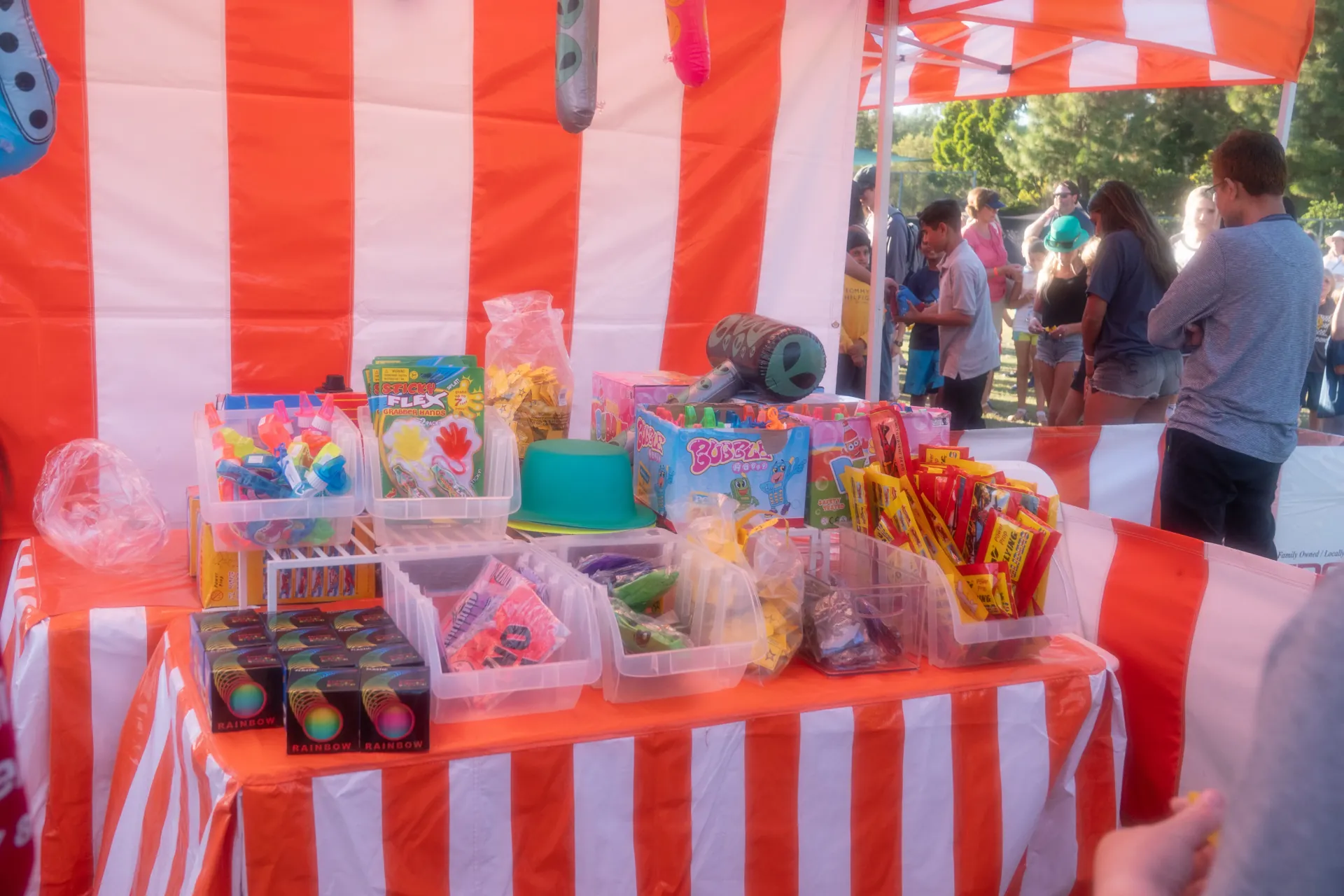
Striped booths or game stations sized to the guest count, with familiar games that move quickly and do not require long explanations from volunteers.
-
Prize planning.
Prize inventory can be matched to ticket play, wristband play, or a redemption-table format so the fundraiser does not run out of small prizes halfway through the event.
-
Concession stations.
Popcorn, cotton candy, and snow cones are the common fundraiser choices because they are recognizable, kid-friendly, and easy to price as add-ons or ticket items.
-
Layout guidance.
A practical booth map helps separate admissions, games, concessions, prize redemption, and sponsor areas so the event reads clearly when families arrive.
-
Optional attendants.
Attendants can run games and concession machines when the organizing group does not have enough trained volunteers or wants parent volunteers focused on sales and check-in.
-
Setup and pack-out.
The production plan should account for vehicle access, hand-truck paths, surface type, power access, and a same-day breakdown window after the fundraiser closes.
Typical timeline for fundraisers in Culver City.
- 1
8-10 weeks out
Set the fundraising goal, pick the venue, choose the basic revenue model, and confirm whether the event is admission-based, ticket-based, wristband-based, or sponsor-supported.
- 2
4-6 weeks out
Lock the booth count, concessions, prize approach, and volunteer roles. School-based events usually need facility approval through the campus or district process before promotion goes out.
- 3
1-2 weeks out
Finalize the site map, check power access, assign volunteer shifts, prepare signs, and decide where guests will buy tickets, collect wristbands, or enter the event.
- 4
Event day
Crew sets equipment, the host group opens admissions and sales, families move through the carnival area, and the organizing committee tracks revenue from tickets, food, donations, or sponsor activity.
Specifics for Culver City.
- School-district setting: Culver City Unified School District events usually work best on blacktop or paved areas near existing restrooms and campus access points. The school office or district facility process should be checked early, especially when outside vendors, food equipment, or after-hours access are involved.
- Park settings: Culver City Park, Syd Kronenthal Park, and Blair Hills Park can fit smaller community fundraisers when the group wants an outdoor public setting. Park use may require city coordination, and the event footprint should avoid blocking normal park circulation.
- Community-center fit: The Culver City Senior Center area can make sense for civic groups or intergenerational fundraisers where guests arrive steadily rather than all at once. These events usually need a tighter booth plan than a school blacktop.
- Ticket vs. Wristband: Wristbands make the event feel simple and reduce lines at individual booths. Tickets make each activity feel like a purchase and can work better when the goal is to raise money through repeated small transactions.
- Power and concessions: Concession machines need reliable power and a protected service area. If outlets are far from the booth area, the plan should account for generator placement, cord routing, and keeping food lines separate from game traffic.
- Neighborhood logistics: Culver City events often sit near residential streets, so guest arrival, loading space, and amplified sound deserve early attention. A compact layout with a clear entrance usually works better than spreading activities across several disconnected corners.
Culver City, CA.
ZIPs: 90230 · 90231 · 90232 · 90233
Carnival Fun Experts delivers fundraisers throughout Culver City and the surrounding Los Angeles County area. Pin shows the city center; we cover every ZIP listed above.
Common questions.
What is the best fundraiser format for a school or parent group?
For a school-size crowd, wristbands are usually easiest to manage because families pay once and kids can play freely. Ticket bundles work better when the committee wants more control over per-activity revenue or plans to combine games, food, and raffle entries.
How many booths does a Culver City fundraiser need?
A small fundraiser can run with four to six booths plus concessions. Larger school or community events usually need eight or more activity points so lines do not stack up at the first game inside the entrance.
Can a fundraiser happen at a park instead of a campus?
Yes, but the planning is different. A park layout needs attention to permits, public access, restrooms, loading, and whether the group can control the entry point well enough for ticket or wristband sales.
Who handles ticket sales and money?
The host organization should handle all payments, ticket sales, donation collection, raffles, and sponsor tables. Carnival Fun Experts can be scoped around the carnival equipment and activity operation, while the fundraiser committee controls the money side.
Are concessions worth adding?
Usually, yes. Popcorn, cotton candy, and snow cones give guests a reason to spend beyond admission or wristbands. They also help keep families on site longer, which matters for sponsor visibility and raffle participation.
How early should a group start planning?
Eight weeks is a practical minimum for a school or community fundraiser. More time helps when the event needs campus approval, city park coordination, sponsor outreach, volunteer signups, or printed promotion.
About this guide.
This local guide to Fundraisers in Culver City was compiled by Carnival Fun Experts, the carnival-rental partner for fundraisers serving Los Angeles County. The guide focuses on the planning patterns that come up repeatedly for school groups, parent committees, nonprofits, clubs, and community organizations using carnival games, concessions, and family activities as a fundraising format.
Helpful local references: Culver City Unified School District · City of Culver City Parks, Recreation and Community Services
Fundraisers in nearby cities.
Planning a fundraiser in Culver City?
Share the venue, expected guest count, fundraising model, and rough budget — and Carnival Fun Experts will scope a carnival layout that fits the space and audience.
Get a quote →