
school carnivals in Hidden Hills.
A school carnival is a campus or community event built around carnival game booths, simple concessions, prize redemption, and a ticket or wristband model that lets families move through activities at their own pace. In Hidden Hills, the planning questions are less about fitting a carnival into a dense urban campus and more about access, parking, noise expectations, and whether the event belongs at a school facility, a community venue, or a private-property setting. This is a local guide to School Carnivals in Hidden Hills — how these events are commonly structured, what committees usually need to decide early, and what is worth checking before the first flyer goes home.
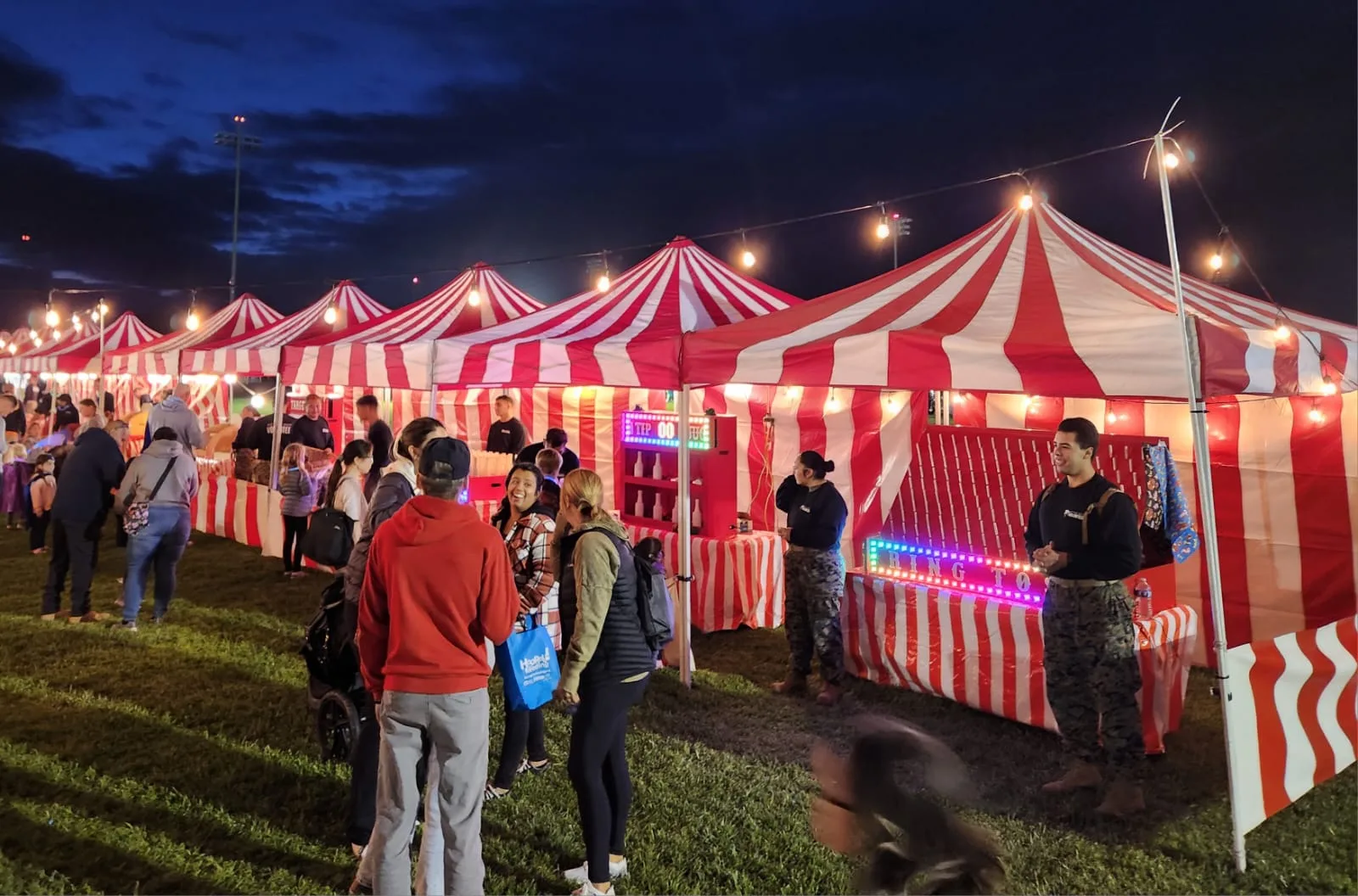
Hidden Hills is a small residential city with a community-centered layout, equestrian facilities, and limited large-event locations compared with nearby San Fernando Valley cities. School carnival planning usually connects back to Las Virgenes Unified School District, private residential gathering spaces, or civic locations such as Hidden Hills Community Center, Hidden Hills Riding Arena, and the area around Hidden Hills City Hall. The format stays familiar: games in a visible loop, concessions near power and shade, ticket sales near the entrance, and prize redemption away from the busiest walkway.
Carnival Fun Experts prepares school carnival quotes for Los Angeles County events by matching the booth count, concession mix, staffing plan, and site footprint to the expected guest count and venue rules.
How a school carnival usually works in Hidden Hills.
A Hidden Hills school carnival is usually more compact than a large district-wide festival. The guest list often centers on one school community, a grade-level celebration, or a family-night fundraiser tied to a PTA calendar. The core layout is a horseshoe or lane: striped booths along one side, concessions near a power source, a ticket or check-in table at the entry point, and a prize station set far enough away that kids are not crowding the games while choosing toys.
The committee decides the event model first. Tickets give each game a clear value and work well for fundraisers. Wristbands make the event feel simpler for families and keep lines moving because kids are not stopping to count tickets before each booth. Carnival Fun Experts is mentioned in planning conversations as the production vendor only after those local decisions are clear: date, venue, expected guest count, power access, and whether the event is meant to raise money or simply give families a school-community night.
What's typically included.
-
Striped carnival booths.
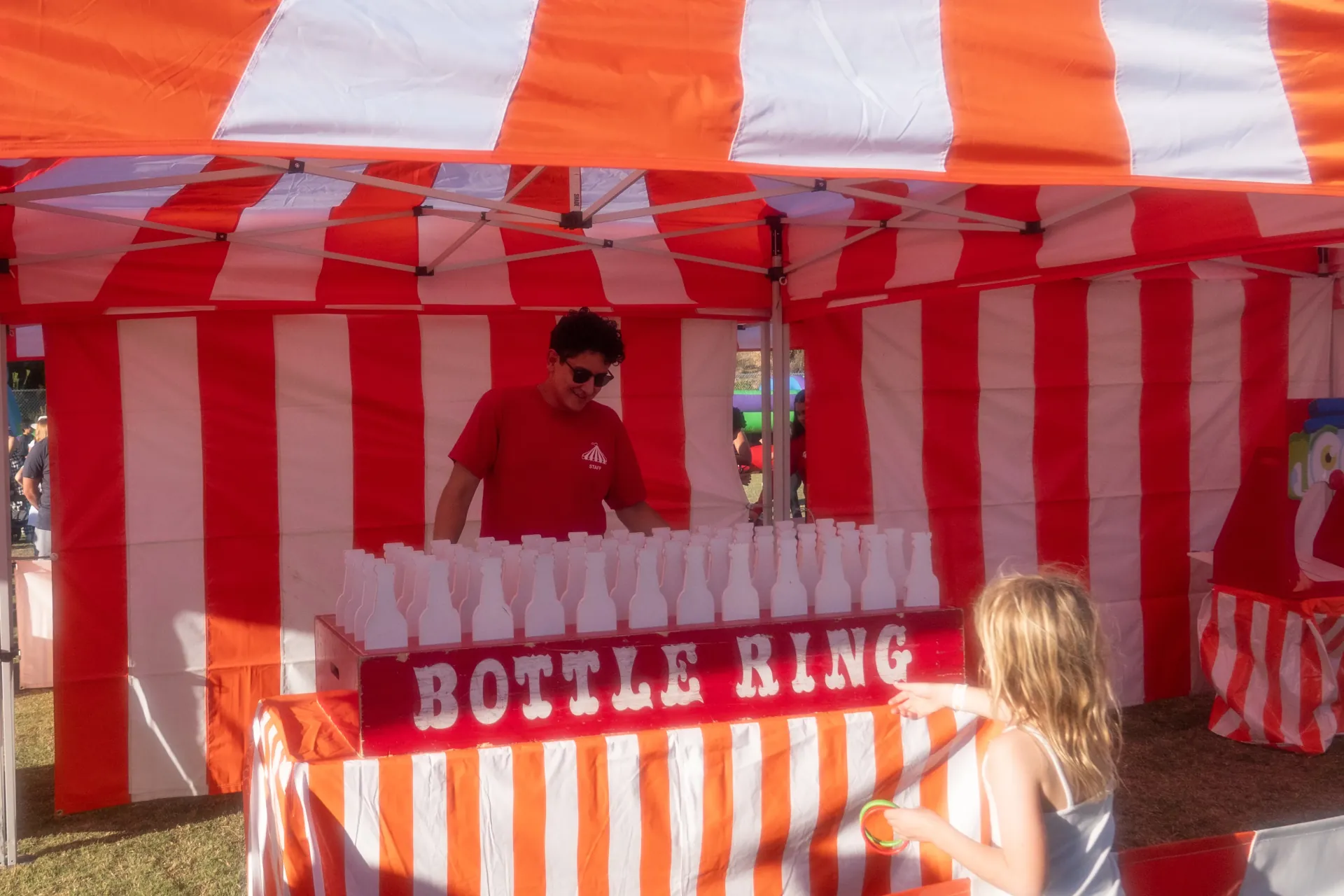
Traditional red-and-white game booths arranged to fit the venue footprint, whether the event is on a school blacktop, community-center hardscape, riding-arena-adjacent open area, or a private paved surface.
-
Age-appropriate games.
Classic booth games such as ring toss, bottle knockdown, plinko, fishing pond, and beanbag toss, selected so younger elementary students can play quickly while older kids still have enough challenge.
-
Prize structure.
A basic prize plan tied to the number of booths and expected guests, with the committee deciding whether prizes are handed out at each booth or collected through a central redemption table.
-
Concession stations.
Common carnival concessions such as popcorn, cotton candy, and snow cones, placed where power, serving flow, and spill cleanup make sense for the site.
-
Event attendants.
Attendants can run booth games and concession stations while school volunteers stay focused on check-in, ticket sales, wristbands, raffle tables, and general parent communication.
-
Setup and breakdown plan.
The production plan should account for gated access, loading areas, venue rules, surface type, and where equipment can be staged before families arrive.
Typical timeline for school carnivals in Hidden Hills.
- 1
8-12 weeks out
The committee chooses the venue, confirms whether the event is a fundraiser or community night, and decides whether tickets or wristbands make more sense. Hidden Hills events should check access and parking early because the city is residential and not built around large public lots.
- 2
4-6 weeks out
Booth count, concession choices, estimated attendance, and volunteer roles are narrowed down. If a Las Virgenes Unified School District site is involved, this is the point to confirm the school’s facility-use process and insurance documentation requirements.
- 3
Week of
The final layout is reviewed: where vehicles enter, where families check in, where power is available, and how the booth line avoids blocking emergency access, driveways, gates, or equestrian paths.
- 4
Event day
Equipment arrives before guests, booths and concessions are set, volunteers take their sales or check-in positions, and the carnival runs for the contracted window before same-day breakdown.
Specifics for Hidden Hills.
- District context: Hidden Hills is associated with Las Virgenes Unified School District, so school-connected carnivals should start with the school office or district facility-use process rather than assuming a private-party setup will apply.
- Venue fit: Hidden Hills Community Center, Hidden Hills Riding Arena, and civic-area gathering spaces can support community-style events, but each location has different access, surface, and use considerations. A carnival layout should be scaled to the actual usable area, not the overall property size.
- Gated access: Load-in needs clear instructions. Vendor arrival times, gate procedures, parking directions, and contact numbers should be settled before event day so the setup crew is not delayed at the entry point.
- Parking and flow: Because Hidden Hills is primarily residential, guest parking and pedestrian circulation matter more than they might at a large school campus. The check-in table should be placed where families naturally arrive without backing up the street or blocking driveways.
- Power planning: Concession machines need reliable power, and booths need enough spacing that cords are not crossing main walkways. When outdoor power is limited, the committee should discuss generator placement, sound expectations, and distance from activity areas.
- Weather and season: Southern California's typically dry climate makes outdoor school carnivals workable through much of the year. Spring and fall are the most comfortable seasons; summer events usually need shade planning and accessible drinking water.
Hidden Hills, CA.
ZIPs: 91302
Carnival Fun Experts delivers school carnivals throughout Hidden Hills and the surrounding Los Angeles County area. Pin shows the city center; we cover every ZIP listed above.
Common questions.
How many booths does a Hidden Hills school carnival need?
A small family-night event can work with four to six booths plus one or two concessions. A larger fundraiser usually needs eight or more booths so lines do not stack up at the easiest games.
Are tickets or wristbands better for a PTA fundraiser?
Tickets usually create more fundraising control because each play has a price. Wristbands are simpler for families and faster at the booths. Some committees use wristbands for games and sell food separately.
Can a school carnival happen away from a campus?
Yes, but the planning changes. Community and private-property locations need a closer look at parking, power, restrooms, load-in, noise expectations, and whether the location owner requires specific paperwork.
What should volunteers handle?
Volunteers are most useful at check-in, ticket sales, wristband distribution, raffle tables, prize redemption, and general parent questions. Booth operation and concession service should be assigned clearly so no station is left uncovered.
What information should be ready before asking for a quote?
Have the date, venue type, expected guest count, preferred event length, ticket-versus-wristband plan, concession preferences, and any access notes. For Hidden Hills, gate instructions and parking assumptions are especially useful.
Does the event need permits or district approval?
School sites and community facilities often have their own approval process. A PTA or committee should confirm the facility-use steps with Las Virgenes Unified School District or the venue owner before finalizing the carnival layout.
About this guide.
This local guide was compiled by Carnival Fun Experts for families, PTAs, and school committees comparing school carnival formats in Hidden Hills and nearby Los Angeles County communities. It is meant to explain the planning landscape before a committee requests a scoped quote from Carnival Fun Experts or any other event vendor.
Helpful local references: Las Virgenes Unified School District · City of Hidden Hills
School Carnivals in nearby cities.
Planning a school carnival in Hidden Hills?
Share the venue, expected guest count, event date, and whether the carnival is ticketed or wristband-based — and Carnival Fun Experts will scope a quote around the site and school-community format.
Get a quote →