amusement rides in La Cañada Flintridge.
Amusement rides are mechanical attractions designed to move guests through a controlled ride cycle — a trackless train circling a paved loop, a small carousel rotating under a canopy, a mini ferris wheel lifting riders a few seats at a time, or teacups spinning on a platform. They are different from inflatables and carnival games because they need more open space, more setup time, and a trained attendant at the ride controls. This is a local guide to Amusement Rides in La Cañada Flintridge — where they typically fit, what the rental includes, and what planners should sort out before adding a mechanical ride to a school carnival, park event, or public festival.
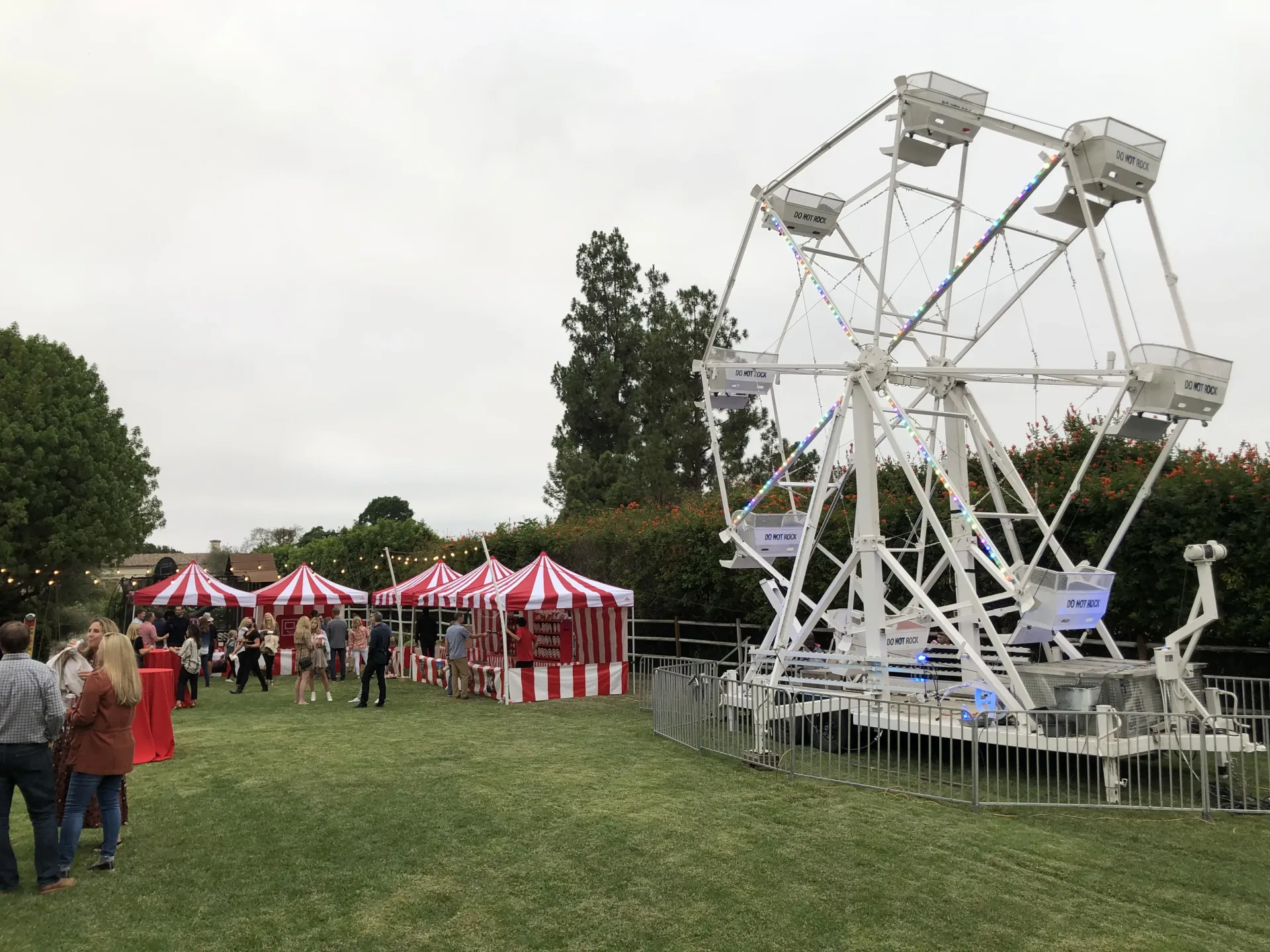
La Cañada Flintridge events tend to use amusement rides selectively because many sites are compact, landscaped, or shared with regular public use. Memorial Park and Glenhaven Park work differently from a school blacktop or a paved lot near Lanterman Auditorium, so the first question is usually not which ride looks best; it is whether the surface, access path, and guest flow support the ride safely.
Carnival Fun Experts quotes amusement rides as part of larger carnival and festival layouts, where the ride footprint can be planned alongside games, booths, concessions, and pedestrian circulation.
How amusement rides are used in La Cañada Flintridge.
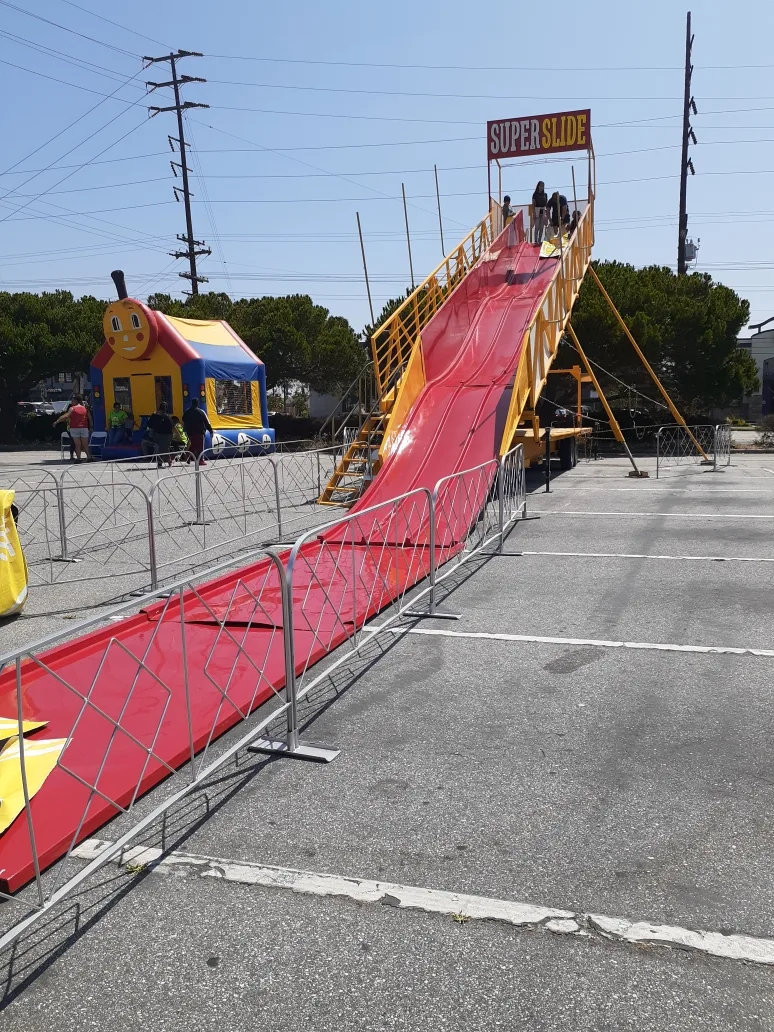
A ride rental usually anchors one edge of the event rather than sitting in the middle of it. Trackless trains need a clear loop with enough turning radius to avoid tight corners and pedestrian pinch points. Carousels, teacups, swing rides, and mini ferris wheels need a level footprint with room for fencing, a queue line, and the attendant position. At a school carnival, that often means the ride goes on a paved court or open blacktop while booths and games run nearby. At a park event, the ride layout depends heavily on permitted use areas and how much of the lawn or paved path can be dedicated to event equipment.
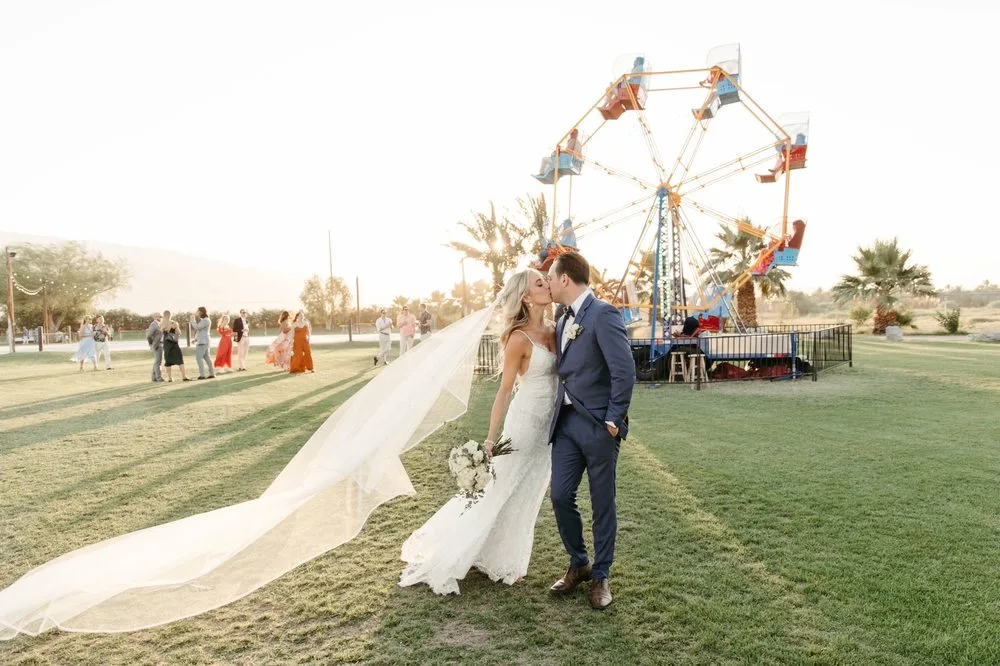
The best use case is a larger event with enough guests to justify the ride's capacity. A trackless train can work well for younger children and family events because riders board in small groups and parents can watch from the route edge. A carousel or mini ferris wheel creates a stronger visual centerpiece, but it also draws a steady line and needs more separation from food, ticket sales, and game traffic. Carnival Fun Experts typically discusses rides in terms of footprint, power, and guest age before narrowing the options, because those constraints decide more than the theme does.
What's typically included.
-
Ride equipment.
The rented attraction itself — such as a trackless train, carousel, mini ferris wheel, swing ride, or teacup ride — selected to match the event size, surface, and expected rider age range.
-
Delivery and placement.
The ride is transported to the site and placed in the approved event area, with attention to access path, turning space, overhead clearance, slope, and nearby pedestrian flow.
-
Ride attendant.
Mechanical rides are operated by an attendant during the contracted rental window. The attendant controls boarding, starts and stops the ride cycle, and keeps the queue moving.
-
Basic queue setup.
Most ride layouts include a defined entry point, exit point, and waiting area so children are not crowding the ride platform or stepping into the operating zone.
-
Power planning.
Some rides require a dedicated electrical circuit; others may need a generator when site power is too far away or already committed to concessions, sound, or lighting.
-
Breakdown and pickup.
After the rental window, the ride is shut down, packed, and removed from the site. Larger rides need enough time and vehicle access for an orderly load-out.
Typical timeline for amusement rides in La Cañada Flintridge.
- 1
4-8 weeks out
Pick the ride type, event date, and likely venue area. For schools and parks, this is when planners should confirm whether mechanical rides are allowed under the facility-use or park-use rules.
- 2
2-3 weeks out
Lock the footprint, surface, access route, and power plan. If a generator is needed, it should be treated as part of the ride layout rather than an afterthought.
- 3
Week of
Confirm arrival time, parking or loading access, and the final event map. The ride should not compete with food lines, ticket sales, emergency access, or main pedestrian paths.
- 4
Event day
The ride is delivered, positioned, checked, and operated for the contracted window. At closing, the queue is cut off, remaining riders cycle through, and the ride is packed for pickup.
Specifics for La Cañada Flintridge.
- Park footprint: Memorial Park, Glenhaven Park, Glenola Park, and Mayors' Discovery Park each require a careful layout decision because mechanical rides need more than a patch of open grass. The usable area has to account for queue lines, vehicle access, level ground, and ordinary park circulation.
- School use: La Cañada Unified School District events are usually better suited to rides when there is a paved play area or open blacktop available. A ride placed too close to booths, lunch tables, or classroom walkways creates line-control problems even when the equipment technically fits.
- Auditorium and civic sites: Events around Lanterman Auditorium can have tighter loading and pedestrian constraints than a field layout. A trackless train or compact kiddie ride may be more practical than a larger visual centerpiece when the event footprint is narrow.
- Surface requirements: Mechanical rides prefer firm, level surfaces. Grass may work for some equipment when the ground is dry and even; concrete, asphalt, or compact paved areas are usually easier for setup, leveling, and queue control.
- Power needs: Ride power should be planned separately from concession machines, lighting, and audio. If the available outlet is far from the ride area or shares a circuit with other event equipment, a generator may be the cleaner option.
- Weather and wind: Southern California's typically dry climate helps outdoor ride rentals, but wind and rain still matter. A wet surface, soft grass, or gusty afternoon can change what can be set up safely, especially for taller or rotating rides.
La Cañada Flintridge, CA.
ZIPs: 91011 · 91012
Carnival Fun Experts delivers amusement rides throughout La Cañada Flintridge and the surrounding Los Angeles County area. Pin shows the city center; we cover every ZIP listed above.
Common questions.
How much space does an amusement ride need?
It depends on the ride. A compact kiddie ride may need a clear rectangular footprint plus queue space, while a trackless train needs a route with turning room. The useful measurement is not just the ride size; it is the ride, fencing, line, operator area, and access path together.
Can amusement rides set up on grass?
Sometimes. The surface has to be firm, level, and accessible for delivery. Many planners prefer asphalt, concrete, or blacktop because mechanical rides are easier to level and operate there, especially when the event has a steady queue.
Do rides need electricity?
Most mechanical rides need either a dedicated electrical hookup or a generator. The quote should identify the power source early, because a ride cannot simply share a busy outlet already feeding concessions, lighting, or.
Is an attendant included with the ride?
Mechanical rides are normally operated by a ride attendant for the rental window. Parents, volunteers, and event hosts should not be expected to run the controls or manage boarding.
What ages are amusement rides best for?
Most portable carnival rides used at school and community events are aimed at children, often preschool through elementary age. The right ride depends on rider height, weight guidance, and whether parents are expected to ride with younger children.
What happens if the weather turns bad?
Rain, wet ground, or wind can affect setup and operation. For larger public events, it is worth discussing a weather plan before booking so the event map, timing, and cancellation terms are understood in advance.
About this guide.
This local guide to amusement rides in La Cañada Flintridge was compiled by Carnival Fun Experts, a Southern California carnival event production company. It is meant to help planners think through ride footprint, surface, power, queue control, and local venue fit before requesting a quote.
Helpful local references: La Cañada Unified School District · Memorial Park
Other services in La Cañada Flintridge.
Amusement Rides in nearby cities.
Planning amusement rides in La Cañada Flintridge?
Share the venue, date, expected guest count, and available surface area — and Carnival Fun Experts will help narrow the ride options and quote a layout that fits the site.
Get a quote →