
school carnivals in La Verne.
A school carnival is a campus-based family event built around carnival game booths, simple concessions, prize redemption, and either a ticket or wristband system for play. In La Verne, the format usually fits the familiar Southern California school-event pattern: a few hours after school or on a weekend, booths arranged on a blacktop or field edge, parent volunteers handling sales and check-in, and children moving between games, snacks, and prizes. This is a local guide to School Carnivals in La Verne — what they typically include, where the planning details tend to matter, and how families and PTA committees can think through the event before choosing a layout.
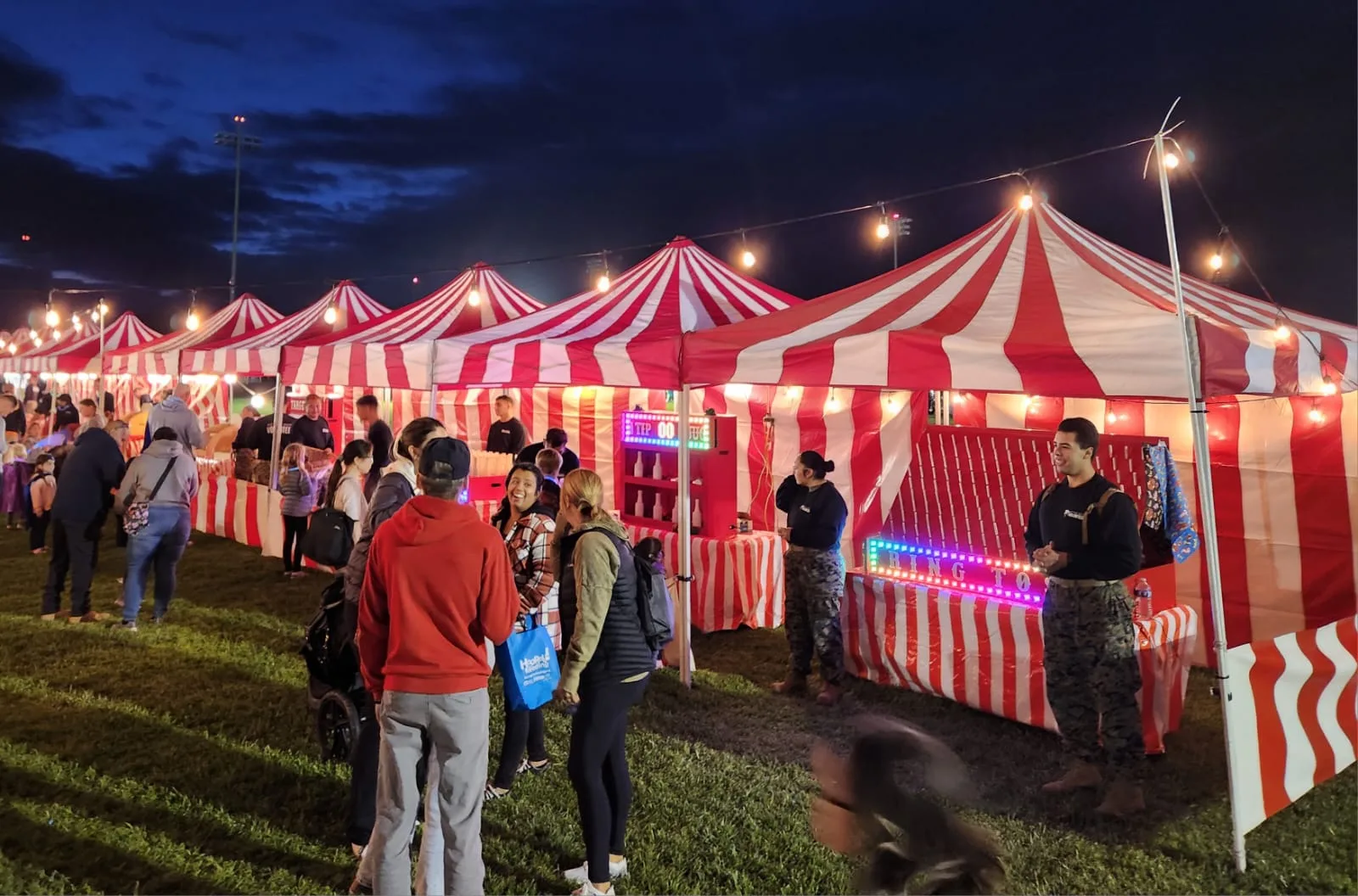
La Verne school carnivals most often serve Bonita Unified School District families, with events shaped by the city's smaller foothill setting and its mix of residential neighborhoods, school campuses, and civic gathering spaces. Campus blacktops, grass fields, and multipurpose-room patios are the usual footprint. Larger community-facing events may look toward familiar local anchors such as the La Verne Community Center or university-area facilities when a school site is not the right fit.
Carnival Fun Experts appears on this page as the event-production brand, but the guide itself is meant to explain the local planning landscape rather than make claims about any one package.
How a school carnival actually unfolds in La Verne.
The basic layout is simple: ticket table near the entrance, game booths around the perimeter, concessions near power or shade, and prize redemption in a place where the line can spread without blocking the games. Younger children tend to repeat the easier games; older students drift toward skill games, food, and hanging out with friends. A compact event might use a few booths and two concessions, while a bigger fall festival may need a fuller midway-style arrangement so lines do not stack into the walkways.
For a PTA or school committee, the planning work is less about inventing a carnival and more about matching the footprint to the audience. Bonita Unified campuses and nearby civic spaces vary in usable flat space, access gates, outlet locations, and parking patterns. Carnival Fun Experts is mentioned here because many visitors are comparing production options, but the useful questions are practical ones: how many guests are expected, whether the event is a fundraiser or a free family night, and which areas of campus can be used without interfering with after-school programs or sports.
What's typically included.
-
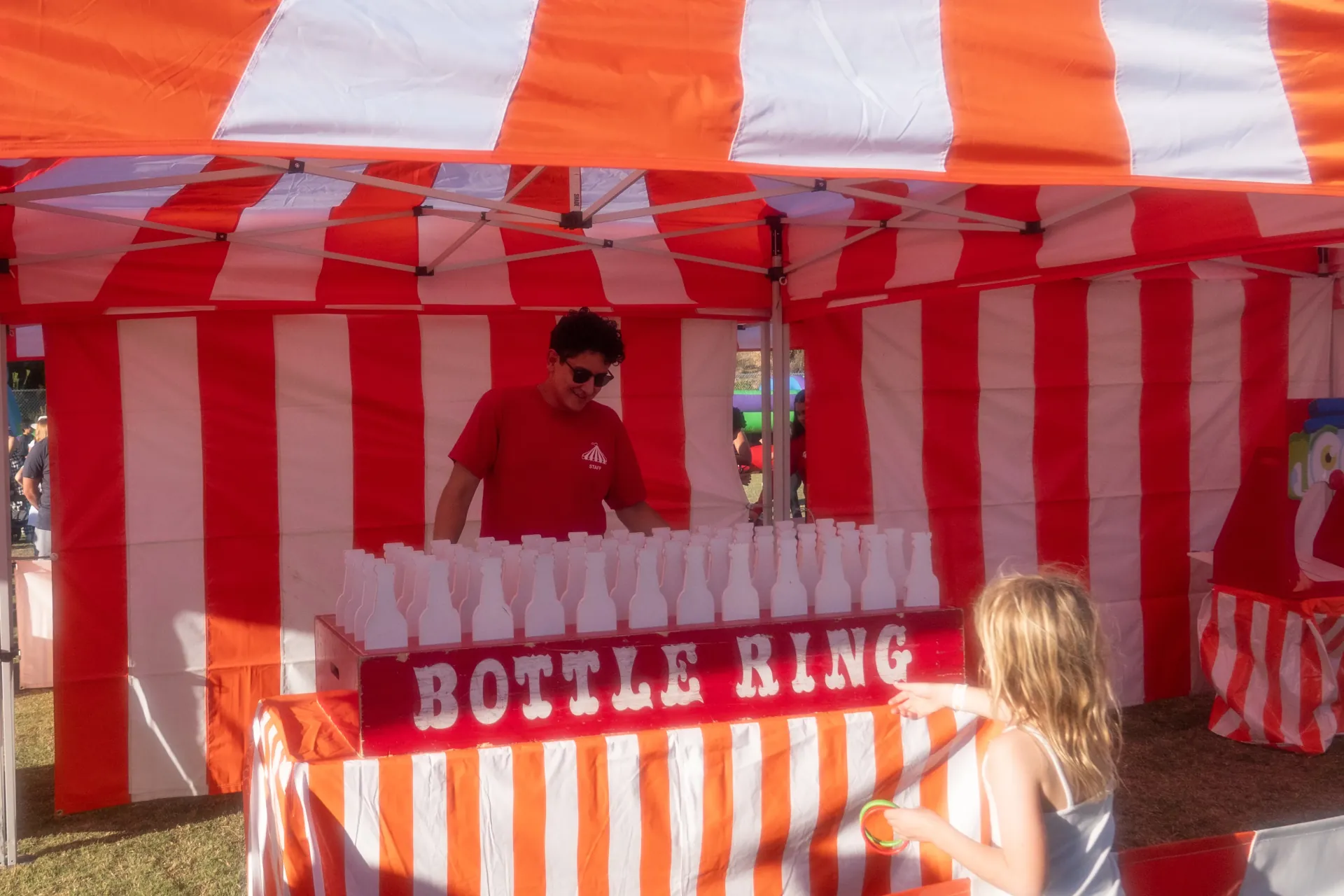
Striped game booths.
Traditional carnival booths form the visual backbone of the event. Schools usually scale booth count to expected attendance, available blacktop space, and whether the goal is short lines or a denser fundraising layout.
-
Carnival games and prizes.
Common games include ring toss, bottle knockdown, plinko-style boards, fishing pond, beanbag toss, and other quick-play activities. Prize tables are usually organized by ticket value, age range, or simple consolation-plus-top-prize tiers.
-
Concession stations.
Popcorn, cotton candy, and snow cones are the standard school-carnival concessions because they are familiar, fast to serve, and easy for families to understand. Schools sometimes add pizza, water, or bake-sale items separately.
-
Attended activity areas.
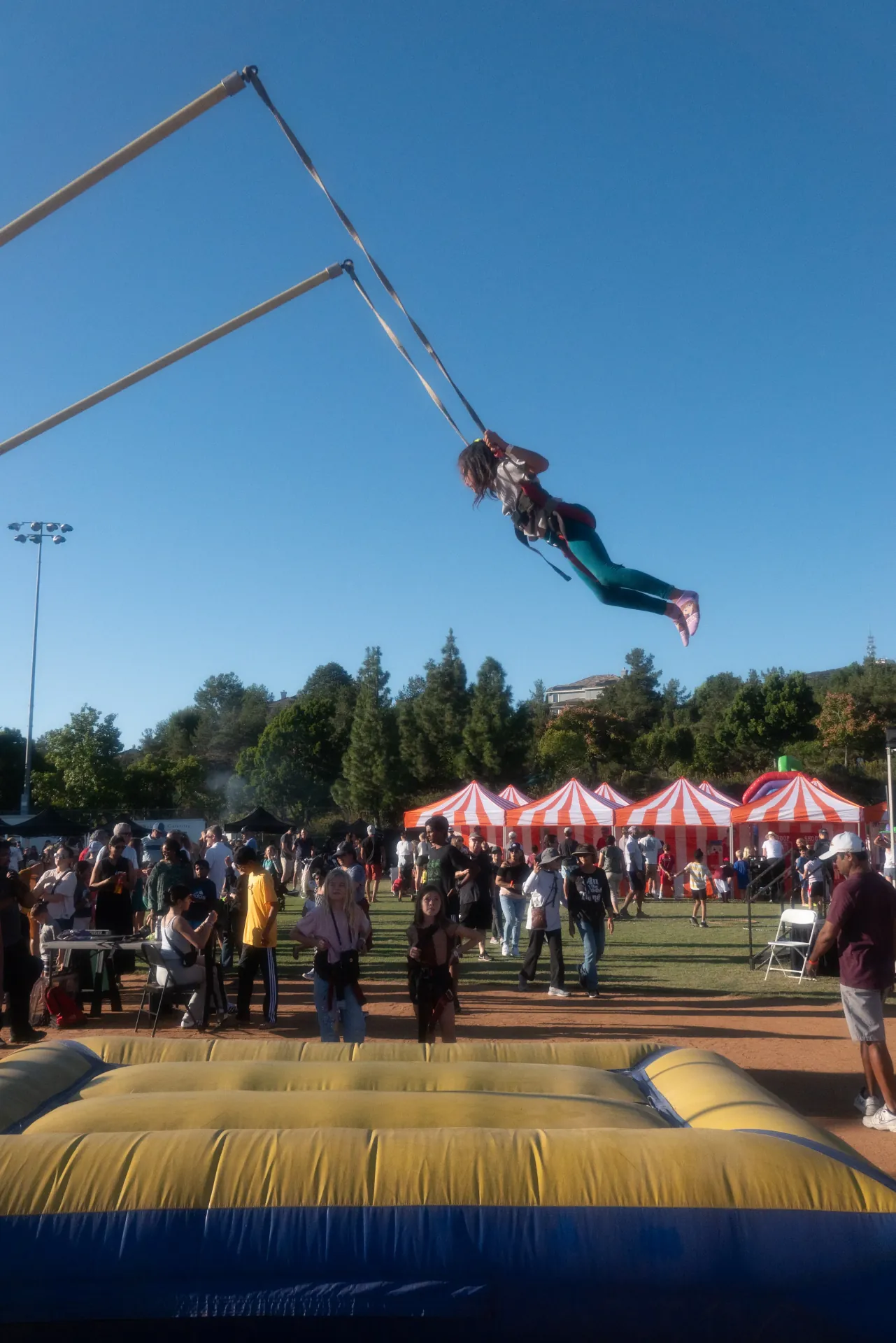
A staffed booth keeps the rules consistent, resets the game between players, and helps the line move. Parent volunteers usually remain focused on admissions, ticket sales, prize redemption, and school-run food tables.
-
Setup and pack-out planning.
Carnival layouts need delivery access, staging space, and a clear path from truck unloading to the event area. The useful planning detail is not the exact arrival time; it is whether the campus can stay clear long enough for safe setup and breakdown.
-
Paperwork review.
School facility use often involves insurance documentation, vendor approval, and district or site authorization. PTAs should confirm the exact requirements with Bonita Unified School District or the school office before finalizing an outside vendor.
Typical timeline for school carnivals in La Verne.
- 1
8-12 weeks out
Pick the target season, check the campus calendar, and decide whether the event is a fundraiser, family night, open house add-on, or end-of-year celebration. This is also the right time to compare rough carnival sizes.
- 2
4-6 weeks out
Lock the footprint, choose the booth and concession mix, and start the volunteer plan. Flyers, presale wristbands, ticket sheets, and room-parent communication usually happen in this window.
- 3
Week of
Confirm attendance estimates, rain plan, access gates, power locations, parking notes, and where ticket sales and prize redemption will sit. A simple map prevents most event-day confusion.
- 4
Event day
Setup happens before families arrive, games run through the scheduled window, and pack-out follows after the last play period. School volunteers should expect to manage cashless sales, ticketing, and any school-supplied food or tables.
Specifics for La Verne.
- District context: Bonita Unified School District is the main school-district reference point for La Verne families. PTA committees should work through the school office for facility-use rules, vendor documentation, and any campus-specific restrictions.
- Campus footprint: Most school carnivals work best on a blacktop, paved court area, or flat field edge with a clear entrance. A horseshoe or U-shaped layout keeps families moving while leaving the center open for gathering, tables, or a small stage.
- Nearby landmarks: La Verne's civic and school-event geography is shaped by long-standing anchors such as the University of La Verne, the La Verne Community Center, Ortmayer Stadium, Ben Hines Field, and Brackett Field. These names are useful waypoints when discussing traffic, parking, and event access.
- Tickets versus wristbands: Tickets are better when the carnival is a fundraiser and each game or concession has a value. Wristbands are simpler for family nights because children can play repeatedly without returning to a sales table. Some schools use wristbands for games and tickets for food.
- Power access: Concession machines, lighting, sound, and inflatable add-ons all change the power plan. Before booking, the committee should identify outdoor outlets, panel access rules, and whether extension cords can cross any public walkway.
- Weather and shade: Southern California's typically dry climate makes outdoor carnivals practical for much of the school year, but heat, wind, and early-evening darkness still matter. Shade near concessions and a clear rain-date policy are worth deciding early.
La Verne, CA.
ZIPs: 91750
Carnival Fun Experts delivers school carnivals throughout La Verne and the surrounding Los Angeles County area. Pin shows the city center; we cover every ZIP listed above.
Common questions.
How early should a La Verne school start planning a carnival?
Eight to twelve weeks is a comfortable planning window for a standard school carnival. Larger fall festivals, events tied to open house, and Saturday fundraisers benefit from starting earlier because campus calendars, volunteers, and vendor availability all need to line up.
How many carnival booths does a school need?
A small family night can work with four to six booths plus concessions. A larger fundraiser usually needs eight to twelve activity points so lines stay reasonable. The right count depends on expected attendance, event length, and whether students will replay games multiple times.
Are tickets or wristbands better for fundraising?
Tickets usually give the PTA more control over spending because each game or concession has a visible cost. Wristbands are easier for families and reduce repeat sales lines. A hybrid model — wristband for games, tickets or direct payment for food — is common.
Can a school carnival happen off campus?
Yes, but off-campus events add more coordination. A civic facility, park-adjacent site, or university-area venue may require separate rental approval, insurance review, parking planning, and rules for food service or amplified sound.
What should volunteers expect to handle?
Volunteers usually handle check-in, ticket or wristband sales, prize redemption, water sales, school information tables, and cleanup around school-owned areas. Activity booths and concessions should be assigned clearly so no one is guessing during the event.
What information should be ready before requesting a quote?
Have the event date, start and end time, expected guest count, campus surface, available setup area, power notes, and whether the event is a fundraiser or free-entry family night. Carnival Fun Experts can use those basics to shape a more accurate scope discussion.
About this guide.
This local guide was compiled by Carnival Fun Experts, the Southern California carnival-event brand associated with My Little Carnival. It is written as a planning reference for school carnivals, PTA fundraisers, and family events in La Verne and Los Angeles County.
Helpful local references: Bonita Unified School District · City of La Verne
School Carnivals in nearby cities.
Planning a school carnival in La Verne?
Share the date, expected guest count, campus or venue type, and rough budget — and Carnival Fun Experts can help scope a carnival layout that fits the event.
Get a quote →