
school carnivals in Monterey Park.
A school carnival is a community-focused campus event typically organized by a Parent-Teacher Association (PTA) or student body to celebrate a season or raise funds for school programs. In Monterey Park, these events are a staple of the academic calendar for schools within the Alhambra Unified School District, Garvey School District, and Montebello Unified School District. The format generally involves transforming a school’s blacktop or grassy field into a temporary carnival grounds featuring striped game booths, classic concession stands like popcorn and cotton candy, and interactive prize-winning activities. While the logistical heavy lifting—including equipment delivery, setup, and staffing—is often handled by a production team like Carnival Fun Experts, the event's heart remains local, driven by parent volunteers and school administrators. This guide outlines the typical structure, venue considerations, and planning milestones for school carnivals in Monterey Park.
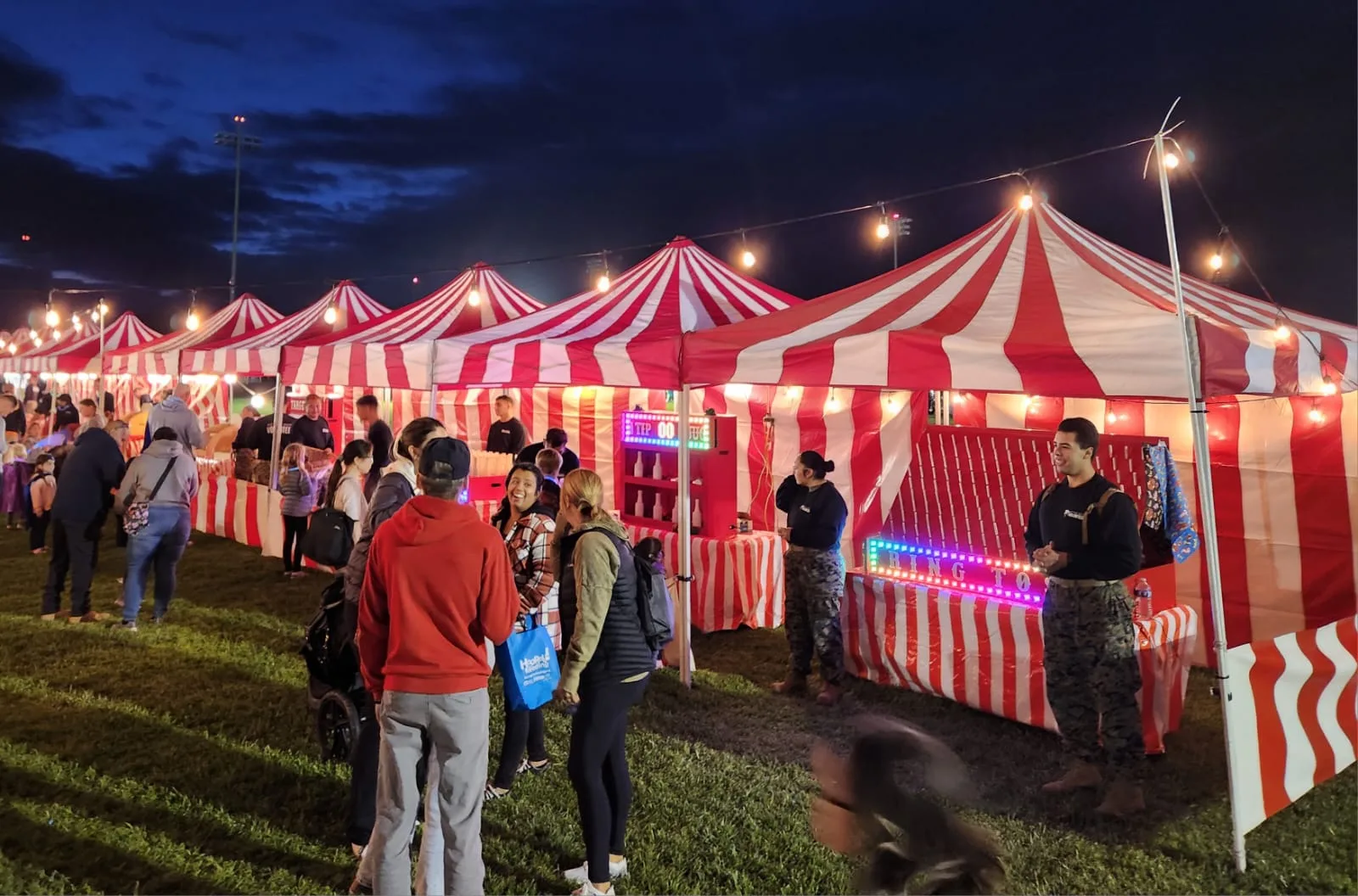
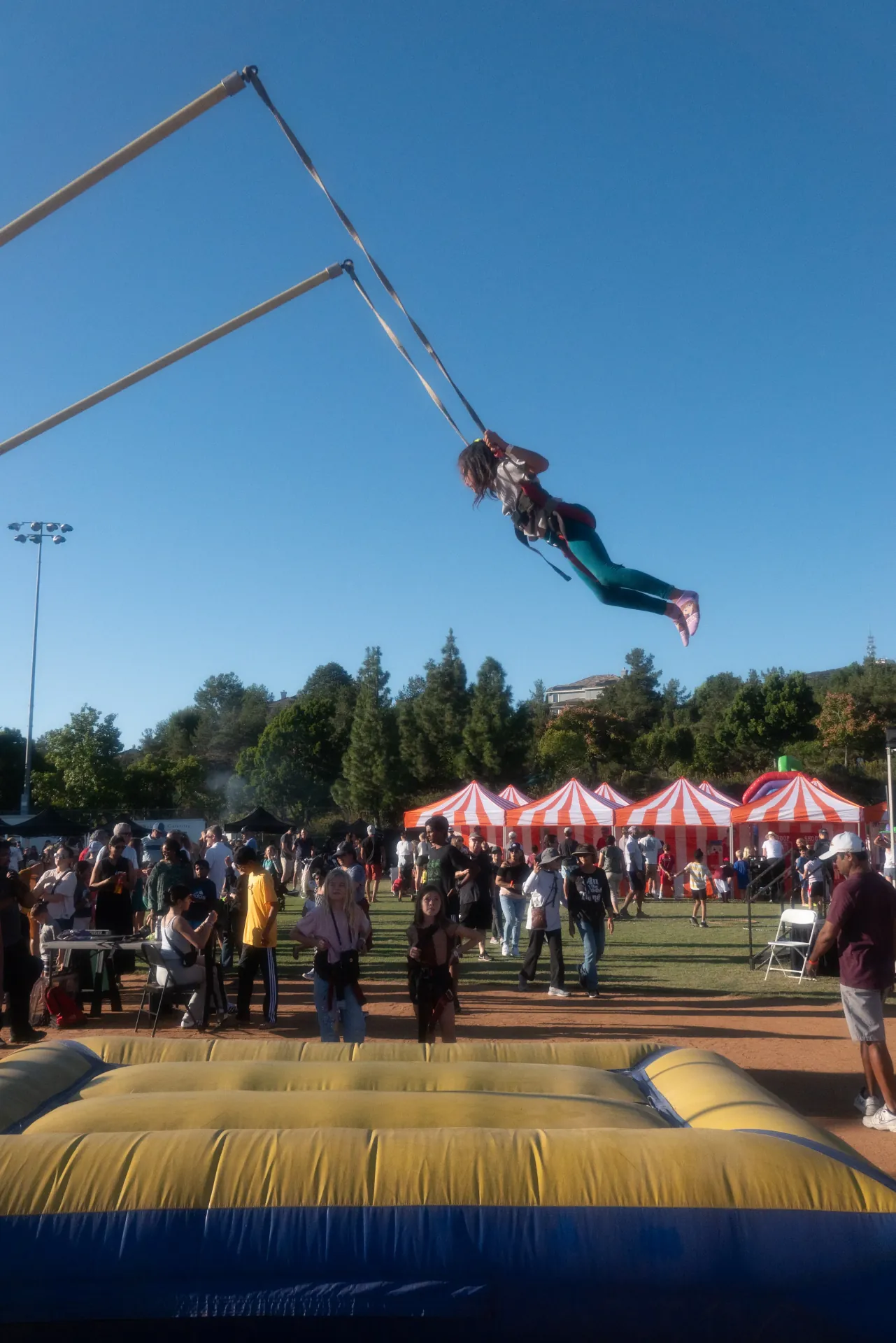
School carnivals in Monterey Park are primarily staged on campus grounds to maximize student safety and minimize transportation hurdles for families. Most events occur at elementary and middle schools across the three overlapping districts that serve the city. For schools with limited campus space, municipal locations like Barnes Park or George Elder Park occasionally serve as off-site venues, providing the necessary square footage for larger-scale fests that include inflatables and multiple concession clusters. Carnival Fun Experts coordinates with local PTAs to ensure that every event footprint respects the specific layout of the site, whether it's a compact blacktop or an expansive community field.
Carnival Fun Experts produces school carnivals for elementary and middle school PTAs across Los Angeles County and the San Gabriel Valley, with most Monterey Park bookings repeating year over year.
How a school carnival actually unfolds in Monterey Park.
The typical Monterey Park school carnival adopts a 'horseshoe' or 'perimeter' layout to manage the flow of three hundred to over six hundred attendees. Striped 8x8 or 10x10 booths are arranged along the outer edge of a blacktop play area, creating a central promenade where families can gather. This layout allows for clear sightlines across the event and ensures that game lines don't bottleneck the entrance. The concession area is usually grouped together near a power source or under a shaded pavilion, where the aroma of fresh popcorn and cotton candy serves as a natural draw for guests as they arrive.
Economics at these events usually follow one of two models: tickets or wristbands. Many Monterey Park PTAs prefer a hybrid approach, selling wristbands for unlimited game play while requiring tickets or cash for food and high-value attractions. This ensures a baseline of revenue from the wristbands while encouraging incremental spending at the concession stands. Carnival Fun Experts provides the infrastructure—the booths, the games, and the attendants—allowing school volunteers to focus on the high-level tasks like ticket sales, volunteer check-in, and prize redemption, which are critical for maintaining a community-driven atmosphere.
What's typically included.
-
Striped game booths.
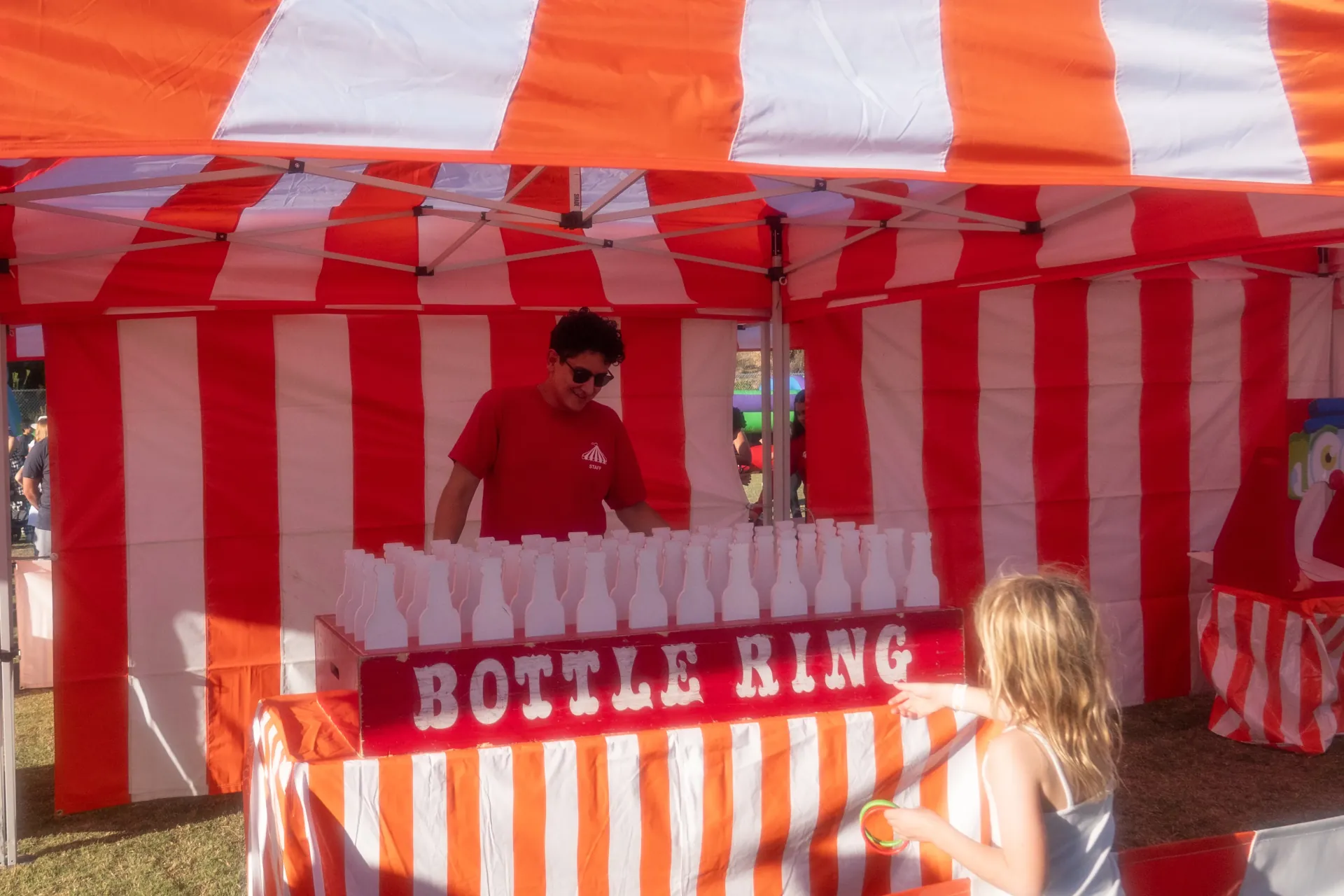
Six to twelve traditional carnival booths depending on the scope — high-peak red-and-white tents with signage, prize displays, and full skirting for a professional 'midway' look.
-
Carnival games + prizes.
Ring toss, bottle knockdown, plinko, balloon pop, dart-the-stars, and fishing pond — each booth comes pre-loaded with consolation and top-tier prize inventory matched to the booking size.
-
Concession stations.
Popcorn poppers, cotton candy spinners, and snow cone shavers — sized to serve the expected guest count with all supplies, scoops, bags, and cones included.
-
Trained attendants.
One staff member per booth and concession station. Staff operate each game and food station, ensuring games are played fairly and food is served safely.
-
Setup and breakdown.
Crew arrives roughly two hours before doors open and packs out within an hour after the event ends. No volunteer lifting required; the playground or field is left as it was found.
-
Permits and COI.
Carnival Fun Experts provides the Certificate of Insurance naming the school district (AUSD, Garvey, or Montebello) as additional insured, which is required for facility-use authorization.
Typical timeline for school carnivals in Monterey Park.
- 1
8-12 weeks out
PTA committee picks the date, books the campus internally, and pulls quotes. Fall fest planning usually kicks off in August; spring carnival planning starts in January.
- 2
4 weeks out
Scope is locked — number of booths, concession lineup, and prize tier. Flyers go to families, ticket presale opens, and volunteer signups are posted. Deposit holds the date.
- 3
Week of
Final guest-count confirmation, walk-through of the blacktop layout with the production lead, and any last permit paperwork submitted through the district's portal.
- 4
Event day
Crew arrives early to set up over two hours, runs the event for the contracted window, and packs out same-day. Prize-table and ticket-sales remain a PTA-volunteer responsibility.
Specifics for Monterey Park.
- District paperwork: Alhambra Unified, Garvey, and Montebello Unified School Districts each have specific facility-use requirements and insurance thresholds. The application typically goes through the school's office manager about four to six weeks before the event.
- Campus footprint: Monterey Park schools vary from the hillside layouts of campuses near Cascades Park to the flatter playgrounds of the Garvey district schools. Most sites use a blacktop play area that fits a 6-12 booth horseshoe comfortably.
- Power access: Cotton candy spinners and popcorn poppers each pull a dedicated 20-amp circuit. Carnival Fun Experts brings a generator when the available outdoor outlets won't cover it, which is common for older campuses without dedicated event hookups.
- Ticket vs. Wristband: Local PTAs split roughly evenly. Wristbands flatten lines and feel friendlier to families; tickets create the 'each game costs something' energy that tends to lift food and prize spending.
- Off-campus alternatives: When a PTA wants more space than the campus allows, Barnes Park, George Elder Park, and Cascades Park have been used as venues — each requires a City of Monterey Park park-use permit on top of the school authorization.
- Weather contingency: Southern California's typically dry climate makes outdoor carnival dates low-risk, but spring carnivals in March or early April occasionally face rain. Most PTAs build a one-week rain date into the contract rather than moving indoors.
Monterey Park, CA.
ZIPs: 91754 · 91755 · 91756
Carnival Fun Experts delivers school carnivals throughout Monterey Park and the surrounding Los Angeles County area. Pin shows the city center; we cover every ZIP listed above.
Common questions.
How early should we book the carnival?
Fall fests in October usually get booked by July; spring carnivals book by January. Saturdays in March, April, and October are the tightest weekends — earlier inquiries get more flexibility on layout and theme.
What does a deposit hold, and how much is it?
A signed contract plus a deposit (typically 25-35%) holds the date. The balance is invoiced after the event. Most PTAs fund the deposit from summer rollover or ticket presale.
Tickets, wristbands, or both?
Either works. Wristbands ($25-30 per kid) move lines faster. Tickets ($1 per play) generate higher average revenue because food sales pile on top. Some Monterey Park schools run a hybrid — wristband for games, tickets for food.
How many booths do we need?
One booth per fifty expected guests for steady play, one per thirty for short lines. A 200-guest event runs comfortably on 4-5 booths plus concessions; a 500-guest event needs 8-12.
Do we need to supply anything beyond volunteers?
Tables and chairs for the prize redemption and ticket sales areas usually come from the school. Volunteers run ticket sales and prize redemption. Carnival Fun Experts brings everything else — booths, games, machines, prizes, attendants.
What about food allergies and prize sensitivity?
Cotton candy, popcorn, and snow cones are standard and nut-free. Prize sensitivity (no toy weapons, no candy) is a common request that Carnival Fun Experts easily honors with screened inventory.
About this guide.
This local guide was compiled by Carnival Fun Experts, the Los Angeles County operation of My Little Carnival — producers of school carnivals, backyard birthdays, and community events across Southern California.
Helpful local references: Alhambra Unified School District · Garvey School District · Montebello Unified School District
School Carnivals in nearby cities.
Planning a school carnival in Monterey Park?
Share the date, the expected guest count, and rough budget — and Carnival Fun Experts will scope a quote sized for your campus and ticket model.
Get a quote →