
carnival games in San Dimas.
A carnival game is a single freestanding game unit — ring toss, bottle ring, dart-the-stars, plinko, balloon pop, milk-can toss, basketball pop, or fishing for ducks — that a player steps up to, takes a turn, and walks away from with a prize. Each one is its own self-contained station: a counter or backboard, the game mechanics, a stock of prizes, and an attendant to run it. Carnival games are the building blocks of almost any carnival-style event; schools, fundraisers, and company family days typically run six to twelve of them side by side to keep lines short and players moving. This is a local guide to carnival games in San Dimas — what the classic games are, how many a given crowd needs, and what Carnival Fun Experts brings when these are part of a full event here.
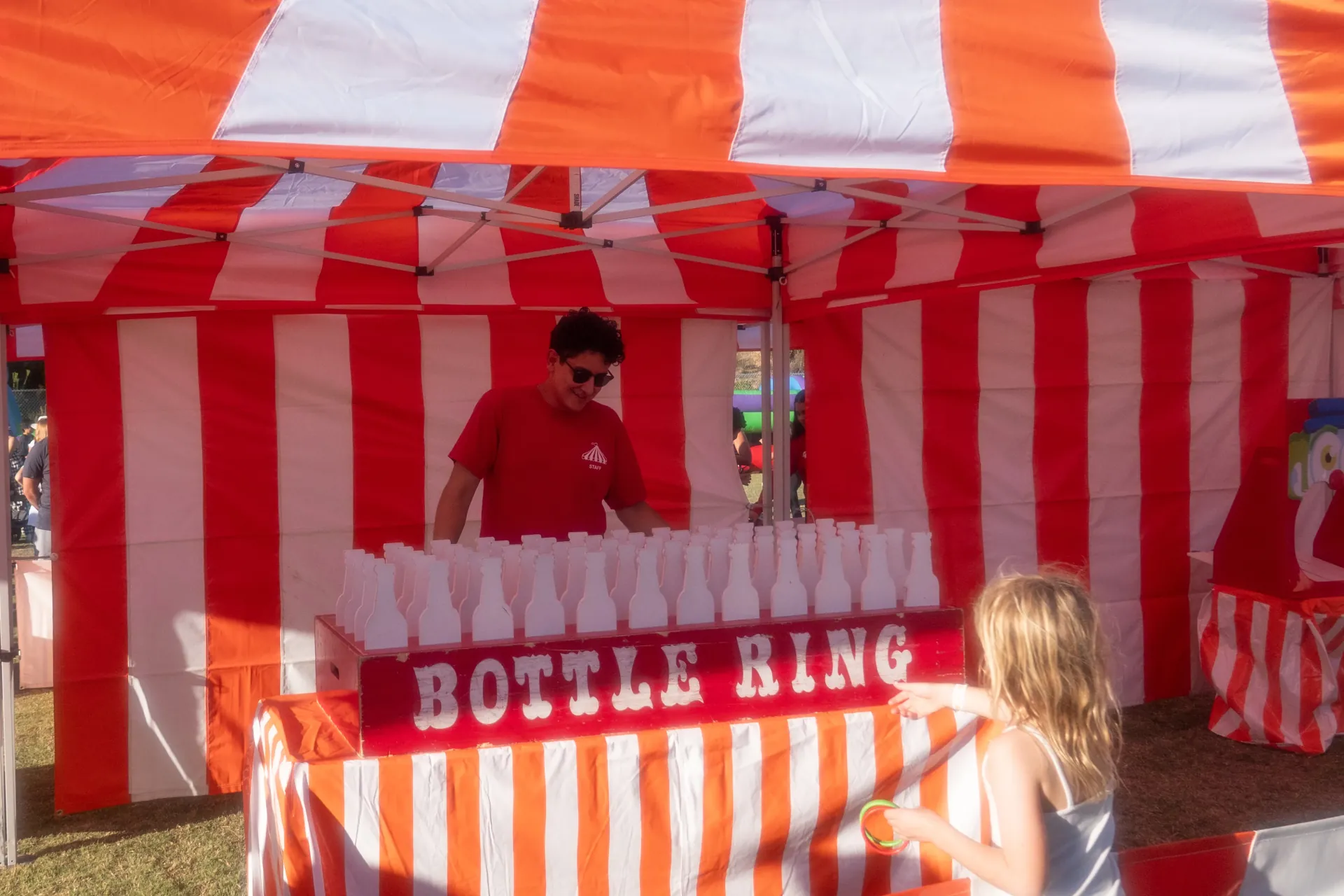
Carnival games show up across San Dimas at school fall fests and spring carnivals, church and nonprofit fundraisers, HOA community days, and company family events. Most outdoor setups happen on a blacktop, a field, or a hardscaped plaza — the kind of flat, open space found at Bonita Unified School District campuses or at city parks like Civic Center Park, Freedom Park, and Pioneer Park. The games are weatherable and don't need much beyond level ground and clearance for a line to form.
Carnival Fun Experts produces complete carnival events across the San Gabriel Valley and Los Angeles County, with carnival games anchoring the layout at most San Dimas school and community bookings.
How carnival games show up at an event in San Dimas.
Carnival games rarely travel alone — they come as a bank of stations inside a larger event Carnival Fun Experts produces. A typical San Dimas school carnival or community fundraiser runs six to twelve games arranged in a horseshoe or a double row, with concessions and a prize-redemption table nearby. Younger kids gravitate to the low-skill, high-win games — duck pond, balloon pop, knockdowns — while the milk-can toss and dart-the-stars pull the older crowd and the dads. Each game is staffed so players get a turn, a prize, and a quick reset without a bottleneck.
Guest count drives the count of games. A loose rule of thumb is one game per fifty guests for steady, comfortable play, tightening to one per thirty when you want short lines. A 200-guest school fest is comfortable on four to five games plus concessions; a 500-guest community day wants eight to twelve. The games are sized to fit a standard blacktop bay or a stretch of park lawn, and the attendants keep prize inventory flowing for the full event window.
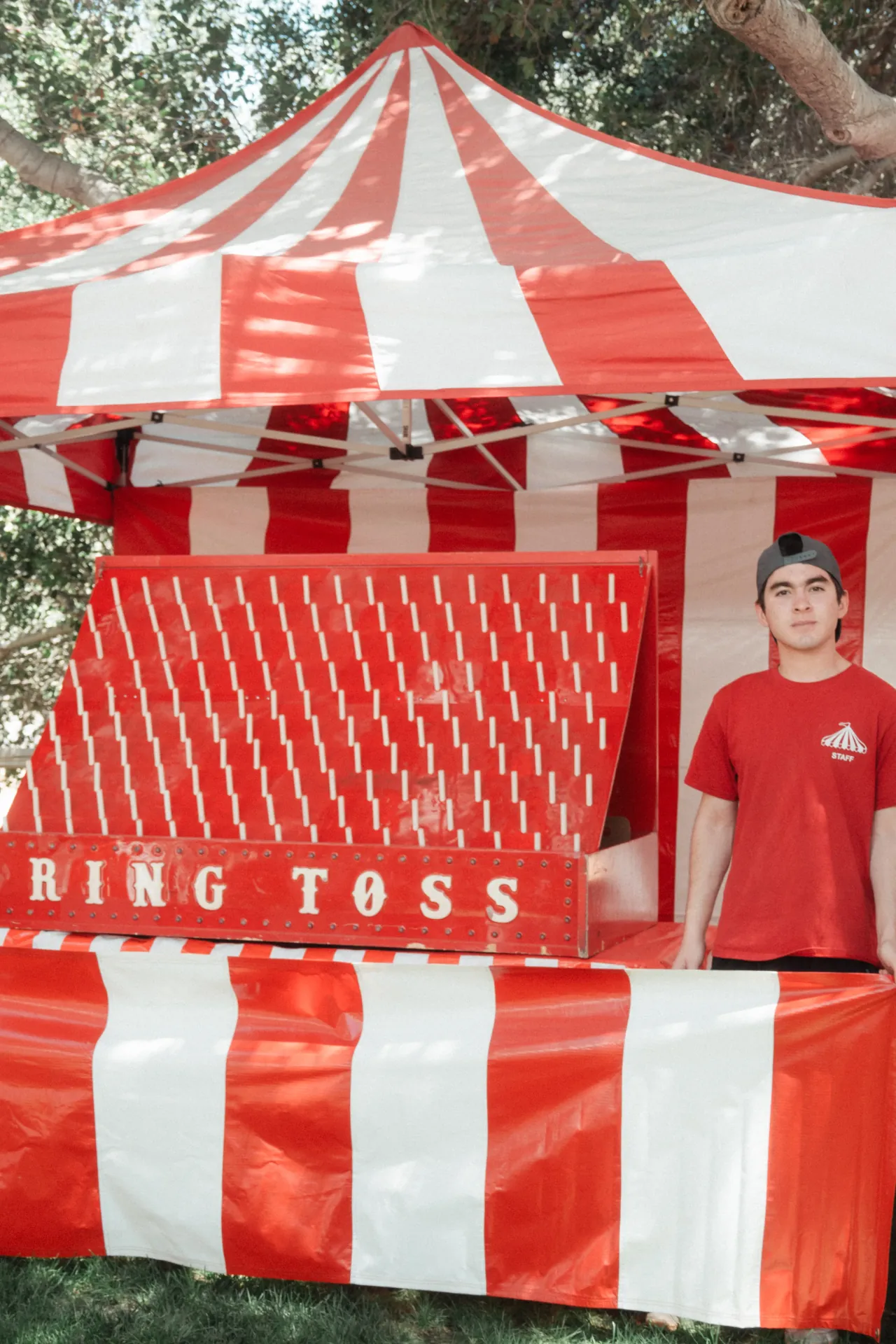
What's typically included.
-
The game units.
Freestanding carnival games chosen for the crowd — ring toss, bottle ring, dart-the-stars, plinko, balloon pop, milk-can toss, basketball pop, and duck pond — each a complete station with its counter, backboard, and mechanics.
-
Prize inventory.
Every game arrives pre-loaded with consolation and top-tier prizes matched to the booking size, so players win something on the way out and the table never runs dry mid-event.
-
Trained attendants.
Attendants to run the games are included when added to the booking in advance — one per station to explain the game, hand out prizes, and reset between players so volunteers aren't learning the mechanics on the fly.
-
Delivery and placement.
Games are delivered to the site and positioned into the event layout — blacktop bay, field, or plaza — with signage and prize displays set before doors open.
-
Setup and breakdown.
Crew stages the games as part of the full event setup and packs them out after the event ends. No volunteer lifting; the space is left as it was found.
-
Certificate of insurance.
Carnival Fun Experts provides the Certificate of Insurance naming the school district or facility as additional insured, which Bonita Unified and most city park permits require for facility-use authorization.
Typical timeline for carnival games in San Dimas.
- 1
Inquire
Share the date, venue, and expected guest count. This is where the game lineup gets roughed out — how many stations, which classics, and whether attendants are added to the booking.
- 2
Quote + hold
Scope is locked into a quote — number of games, prize tier, attendant count — and a deposit holds the date. Spring carnival and fall fest Saturdays in San Dimas fill earliest.
- 3
Delivery + setup
As part of the full event setup, crew delivers the games, positions them into the layout, loads prizes, and has every station ready before the first guest arrives.
- 4
Event day + breakdown
Attendants run the games for the contracted window; crew strikes the stations and packs out after the event, leaving the blacktop or park as it was.
Specifics for San Dimas.
- Common venues: Most San Dimas carnival-game setups land on a Bonita Unified School District blacktop or field, or at a city park — Civic Center Park, Freedom Park, Pioneer Park, Horsethief Canyon Park, and Loma Vista Park are the spaces that come up most for community events and fundraisers.
- Surface: Game units sit equally well on blacktop, concrete plaza, or grass. They need level ground and a few feet of clearance in front for a line to form; freestanding games don't require staking, so a hardscaped surface is no obstacle.
- District paperwork: Bonita Unified School District requires a vendor Certificate of Insurance naming the district as additional insured. The facility-use application typically goes through the school office a few weeks ahead, and Carnival Fun Experts supplies the COI to attach.
- Park permits: Events at San Dimas city parks generally need a City of San Dimas park-use permit, and larger gatherings may require reserving a specific picnic or field area. The permit is the host's to pull; the COI comes from the production team.
- Power needs: The classic carnival games are mechanical and need no electricity, which keeps them flexible for park lawns and open fields. Power is only a factor when concession machines are added alongside the games.
- How many games: Plan one game per fifty guests for steady play, one per thirty for short lines. A 200-guest event runs comfortably on four to five games plus concessions; a 500-guest event wants eight to twelve.
San Dimas, CA.
ZIPs: 91773
Carnival Fun Experts delivers carnival games throughout San Dimas and the surrounding Los Angeles County area. Pin shows the city center; we cover every ZIP listed above.
Common questions.
Can we rent just a few carnival games on their own?
No — Carnival Fun Experts produces complete carnival events rather than renting individual units. Carnival games come as part of a full event setup with delivery, placement, prizes, and breakdown. The games anchor the layout, and the quote scopes the rest around your guest count and venue.
Are attendants included to run the games?
Attendants are included only when added to the booking in advance. Many school and community events add one attendant per game so each station is staffed to explain the game, hand out prizes, and reset between players. If you'd rather run some stations with volunteers, that works too — just flag it in the quote.
Do the games work on grass and concrete both?
Yes. The freestanding game units sit fine on blacktop, concrete plaza, or grass. They don't need staking, so a hardscaped surface like a school blacktop or a park plaza is no problem — they just need level ground and room for a line.
Which games are best for younger kids versus older ones?
Younger kids do best on high-win, low-skill games — duck pond, balloon pop, and bottle knockdowns. Older kids and teens gravitate to the skill games like milk-can toss, dart-the-stars, and basketball pop. A mixed-age crowd usually wants a spread of both so every age has something winnable.
How many games should we plan for our guest count?
A working rule is one game per fifty guests for comfortable, steady play, tightening to one per thirty if you want short lines. A 200-guest school fest is comfortable on four to five games plus concessions; a 500-guest community day wants eight to twelve.
What happens if it rains on our date?
Southern California's typically dry climate keeps outdoor carnival dates fairly low-risk, but a spring Saturday can occasionally catch rain. Most hosts build a one-week rain date into the booking rather than trying to move a full game bank indoors. Discuss the contingency when you scope the quote.
About this guide.
This local guide to carnival games in San Dimas was compiled by Carnival Fun Experts, the Los Angeles County operation of My Little Carnival — producers of school carnivals, fundraisers, and family events across Southern California. Carnival Fun Experts has set carnival games on blacktops, fields, and park lawns throughout the San Gabriel Valley.
Helpful local references: Bonita Unified School District · City of San Dimas Parks & Recreation
Carnival Games in nearby cities.
Planning a carnival in San Dimas?
Share the date, the venue, and your expected guest count — and Carnival Fun Experts will scope a game lineup and send a quote sized to your event.
Get a quote →