
fundraisers in San Marino.
A fundraiser carnival is a community benefit event where the entertainment itself does the earning — striped game booths, concession machines, and a pay-to-play model (ticket strips or all-day wristbands) that turns an afternoon of ring toss and cotton candy into a single-day revenue engine for a school, booster club, church, or nonprofit. The format runs three to five hours, equipment is delivered and set the morning of, attendants run the booths, and the host committee keeps the proceeds. This is a local guide to fundraisers in San Marino — how committees here typically structure them, where they happen, and what's worth knowing before the first planning meeting. Carnival Fun Experts supplies the carnival for this kind of event across Los Angeles County, and San Marino's tight, walkable layout makes it a natural fit.
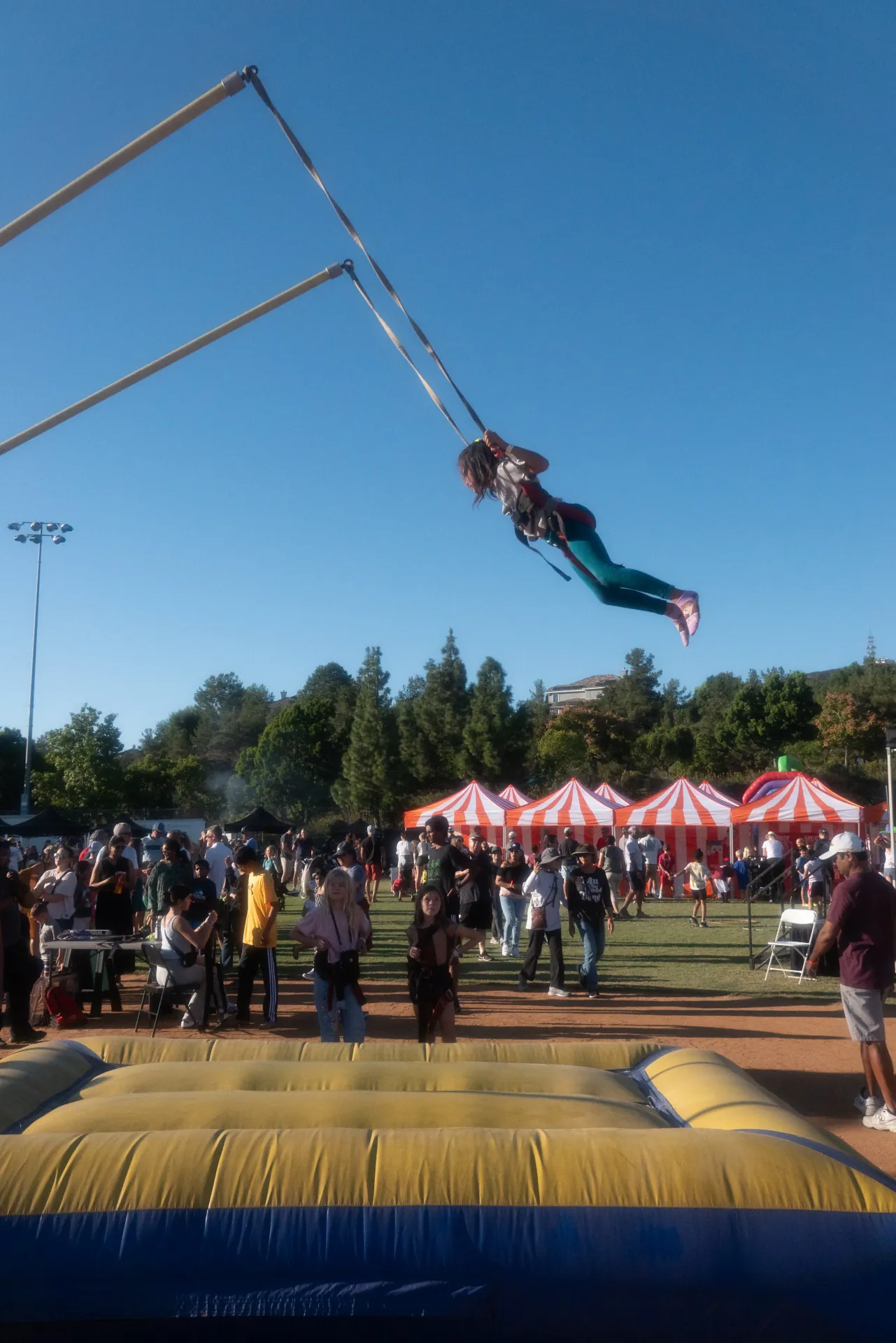
Fundraiser demand in San Marino concentrates around a small number of organized communities — the schools of San Marino Unified School District, their PTA and booster groups, and the civic and faith organizations that anchor the city. Because San Marino is compact and residential, most benefit carnivals land in one of three places: a school blacktop or field, the lawns around Lacy Park, or the grounds of the San Marino Community Center. The Crowell Public Library occasionally hosts smaller family-day fundraisers tied to literacy and youth programs.
Carnival Fun Experts supplies the carnival for fundraisers run by schools, booster clubs, and nonprofits throughout Los Angeles County, with San Marino events sized to the city's park lawns and campus play areas.
How a fundraiser carnival unfolds in San Marino.
A hundred and fifty guests is the small end; six hundred-plus is a full community turnout. The footprint gets sectioned into a horseshoe — striped booths along the perimeter for games, concession machines clustered near shade or a power source, a prize redemption table at one corner, and a ticket or wristband sales booth at the entrance closest to parking. Families arrive in waves: younger kids cycle through games first, older kids and parents drift toward the food and the bigger-ticket booths as the afternoon goes on.
The host committee runs sales, volunteer coordination, and the prize table — that's where the money is counted and the community shows up. Carnival Fun Experts brings the booths, the games, the concession machines, and optional trained attendants so volunteers aren't learning balloon-pop mechanics on the fly. Most San Marino committees choose between a ticket-strip model (buy ten tickets, spend one per game) and an all-day wristband. Tickets tend to lift per-guest spend because food piles on top; wristbands move lines faster and feel friendlier to families who want a flat price at the door.
What's typically included.
-
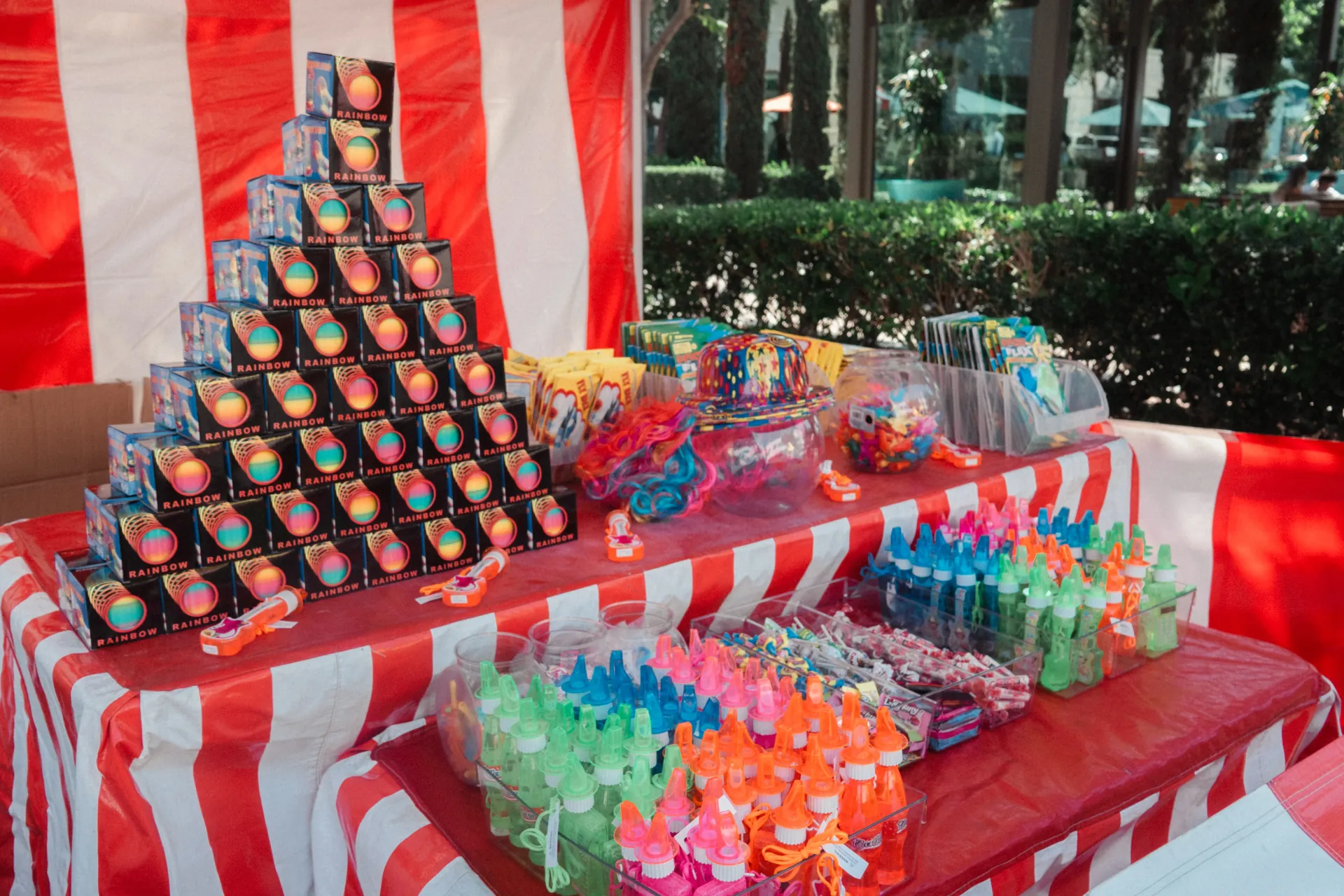
Striped game booths.
Six to twelve traditional high-peak red-and-white tents with signage, prize displays, and full skirting — the number scales to the expected turnout and the available footprint.
-
Carnival games + prizes.
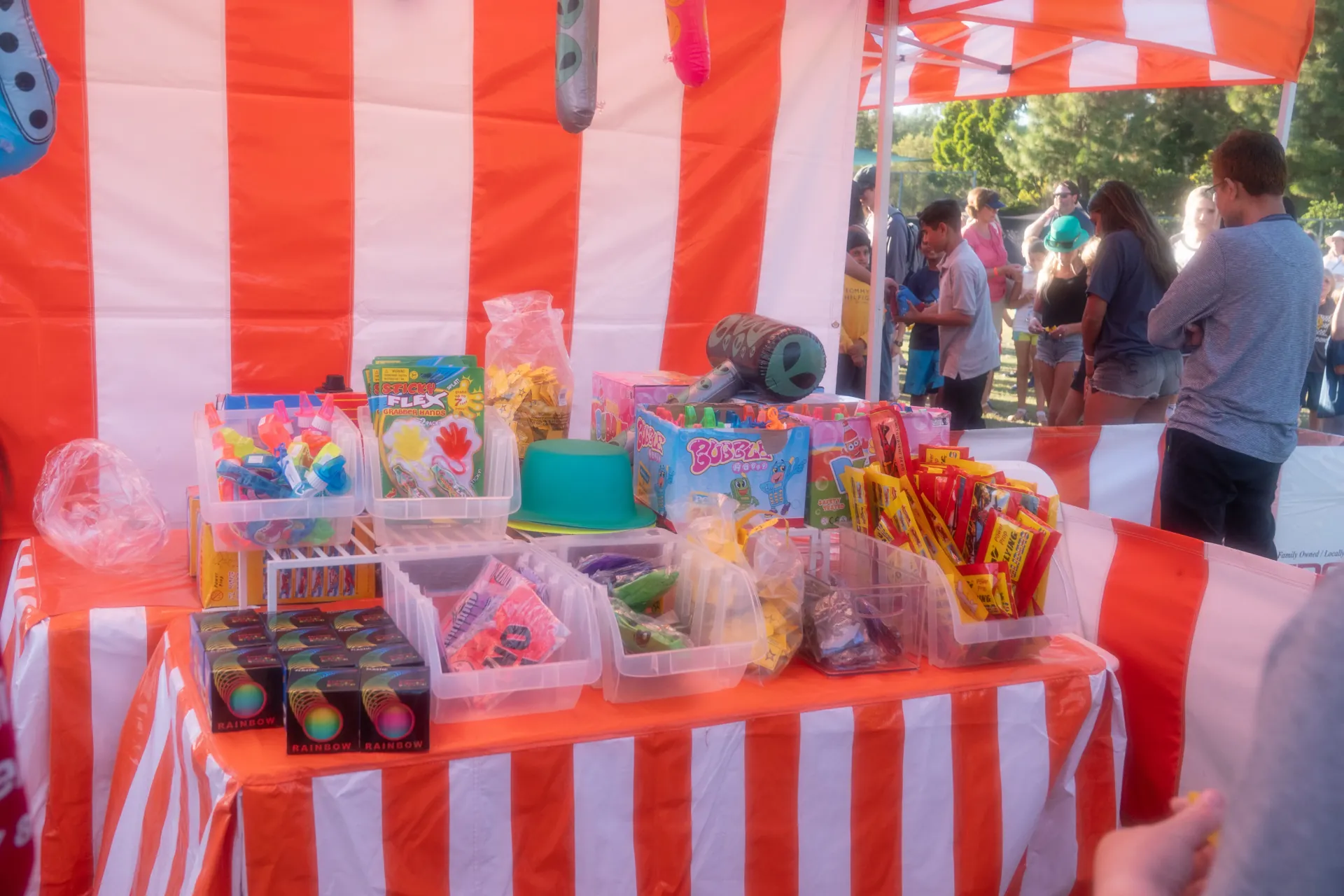
Ring toss, bottle knockdown, plinko, balloon pop, dart-the-stars, fishing pond — each booth arrives pre-loaded with consolation and top-tier prize inventory matched to the booking size.
-
Concession stations.
Popcorn poppers, cotton candy spinners, snow cone shavers — sized to the guest count with all supplies, scoops, bags, and cones. Concession sales are often the single biggest revenue line at a fundraiser.
-
Trained attendants.
One staff member per booth and concession station. The committee's volunteers handle ticket and wristband sales and prize redemption; the production team staffs everything else.
-
Setup and breakdown.
Crew arrives roughly two hours before doors open and packs out within an hour after the event ends. No volunteer lifting required; the park or campus is left as it was found.
-
Permits and COI.
Carnival Fun Experts provides the Certificate of Insurance that San Marino Unified School District and the City of San Marino both require for facility- and park-use authorization.
Typical timeline for fundraisers in San Marino.
- 1
8-12 weeks out
The committee picks a date, reserves the venue (campus, Lacy Park, or the Community Center), sets a revenue goal, and pulls 2-3 quotes. Spring fund drives usually kick off in January; fall benefit carnivals start planning in late summer.
- 2
4 weeks out
Scope is locked — booth count, concession lineup, prize tier, and the ticket-versus-wristband decision. Flyers and presale go to families, sponsor outreach closes, volunteer signups post. A deposit holds the date with Carnival Fun Experts.
- 3
Week of
Final headcount confirmed, a layout walk-through with the production lead, and any last permit paperwork submitted through the district's facility-use process or the city's park-use office.
- 4
Event day
Crew arrives a couple of hours early, sets up the horseshoe, runs the event for the contracted window, and packs out the same day. Ticket sales, prize redemption, and cash handling stay with committee volunteers.
Specifics for San Marino.
- Venue paperwork: School-grounds fundraisers go through San Marino Unified School District's facility-use process and require a vendor COI naming the district as additional insured. Events at Lacy Park or the San Marino Community Center go through the City of San Marino's park- and facility-use office, which carries its own insurance and reservation requirements.
- Footprint and layout: Most San Marino school blacktops fit a 6-12 booth horseshoe comfortably. The lawns at Lacy Park hold a larger spread when a committee wants room for a few hundred guests plus a stage or seating area; the Community Center grounds suit a tighter, more contained setup.
- Power access: Cotton candy spinners and popcorn poppers each pull a dedicated 20-amp circuit. Park lawns rarely have enough accessible outdoor outlets, so Carnival Fun Experts brings a generator to cover the concession load — usually the case for any event larger than a small school-yard carnival.
- Tickets vs. Wristbands: For pure fundraising, ticket strips ($1 per play) tend to maximize total revenue because guests buy in increments and food sales stack on top. All-day wristbands feel friendlier and speed up lines. Some committees run a hybrid — wristband for games, cash for concessions and raffle.
- Stacking revenue streams: A carnival pairs naturally with a raffle, a silent auction, or a sponsor-a-booth program. Committees often sell booth sponsorships to local businesses and put a sponsor sign on each tent — the carnival draws the crowd, the add-ons widen the margin.
- Weather contingency: Southern California's typically dry climate makes outdoor fundraiser dates fairly low-risk, but spring events occasionally lose a Saturday to rain. Most committees build a one-week rain date into the contract rather than scrambling for an indoor backup.
San Marino, CA.
ZIPs: 91108 · 91118
Carnival Fun Experts delivers fundraisers throughout San Marino and the surrounding Los Angeles County area. Pin shows the city center; we cover every ZIP listed above.
Common questions.
How much can a carnival fundraiser actually raise?
It depends on turnout, your pricing model, and how many revenue streams you stack. The production cost is fixed up front; everything you take in at the games, concessions, raffle, and sponsorships above that is net. Committees that presell tickets, sell booth sponsorships, and add a raffle tend to clear the most because the carnival draws the crowd that buys into all of it.
How early should we book?
Spring fund drives book by January; fall benefit carnivals book by late summer. Saturdays in spring and fall are the tightest dates in Los Angeles County, so earlier inquiries get more flexibility on layout, theme, and time slot.
What does a deposit hold, and how much is it?
A signed contract plus a deposit (typically 25-35% of the quote) holds the date. The balance is invoiced after the event. Many committees front the deposit from ticket presale or a sponsor commitment so it isn't out of pocket.
Can we run this at Lacy Park or the Community Center instead of a school?
Yes. Lacy Park and the San Marino Community Center are both used for community events and go through the City of San Marino's reservation process. Each requires a park- or facility-use permit and a COI, which Carnival Fun Experts provides. Park lawns usually need a generator since outdoor power is limited.
How many booths do we need?
A loose rule: one booth per fifty expected guests for steady play, one per thirty for short lines. A 200-guest event runs comfortably on 4-5 booths plus concessions; a 500-guest turnout wants 8-12. Concession capacity matters as much as booth count, since food is often the top earner.
What does our committee need to supply?
Tables and chairs for the prize and sales areas usually come from the school or venue. Volunteers run ticket and wristband sales, prize redemption, cash handling, and any extra food the committee adds. Carnival Fun Experts brings the booths, games, machines, prizes, and attendants.
About this guide.
This local guide to fundraisers in San Marino was compiled by Carnival Fun Experts, a division of My Little Carnival — the carnival-rental partner for fundraisers, school carnivals, and community events across Los Angeles County. Carnival Fun Experts supplies the turnkey carnival; your committee runs the fundraiser and keeps the proceeds.
Helpful local references: San Marino Unified School District · City of San Marino
Fundraisers in nearby cities.
Planning a fundraiser in San Marino?
Share the date, your venue, and the expected turnout — and Carnival Fun Experts will scope a carnival layout and quote sized for your venue and audience.
Get a quote →